
A message I got from a reader who had already been to Tibet: “Is Gannan just ‘Tibet lite’? Five days there sounds like a lot for one monastery and a village. Convince me or talk me out of it.” I wrote back that same evening, because this is the destination I have to defend most often and the one guests thank me for most afterwards. My answer was: it is not a smaller version of anything. It is wetter, greener, lower and far more intimate – you can walk into a monastery courtyard at 7 a.m. and be the only foreigner there, then be eating lunch in a stone village that has no word for “queue”. Here is the five-day route I run, written as the reply I sent, with the cold mornings and the awkward bits left in.
Short answer: Five days is the right first trip to Gannan (southern Gansu’s Tibetan areas). It covers Labrang Monastery and its pilgrim circuit in Xiahe, Sangke Grassland, Gahai Lake, Langmusi on the Gansu-Sichuan border, and two nights at Zhagana, the stone-walled village whose morning mist is the image most people come for. Altitudes run roughly 2,900-3,300 m – lower than the Tibet plateau but high enough to respect. Best months are June to September for green valleys, and October for clear light and fewer crowds.
Let me put you in the first morning, because it explains more than any list. It is 6:40 a.m. in Xiahe. The air is cold enough that you can see your breath, and there is a low haze over the valley. Along the outside of Labrang Monastery runs a covered prayer-wheel corridor about three kilometres long, and it is already moving: pilgrims walking clockwise, hands pushing the wheels, the wooden spindles making a dry, rhythmic creak that never quite stops. Some are elderly, wrapped in heavy robes; one woman has a small child asleep on her back. Nobody is performing for anyone. You join the flow, walk clockwise (always clockwise), and after twenty minutes you realise you have stopped thinking about taking a photograph. That is the difference between Gannan and the places people compare it to. It is lived in, not staged.
At a glance: 5 days in Gannan
| Route | Lanzhou – Linxia – Xiahe – Sangke – Gahai – Langmusi – Zhagana (2 nights) – Hezuo – Lanzhou |
| Altitude | About 2,900 m (Xiahe) to 3,300 m (Langmusi, Zhagana viewpoints) |
| Best months | June to September (green valleys, wildflowers); October (clear light, fewer people) |
| Roads | Paved but winding mountain roads; two days of 3-4 hours driving |
| Physical level | Easy to moderate: one or two short walks at Zhagana, stairs at viewpoints |
| Biggest planning risk | Booking Zhagana village guesthouses in July and August, and underestimating the altitude |
Day 1 – Lanzhou to Xiahe: out of the Yellow River valley and into Tibetan country
We leave Lanzhou after breakfast – no dawn start, because the altitude is coming. The drive goes through Linxia, a Hui Muslim town of minarets, flatbread and lamb soup, and within a couple of hours the architecture, the food and the faces have changed completely. That transition is one of the quiet pleasures of this route: you cross a cultural border without crossing a national one.
Afternoon at Labrang Monastery, one of the six great Gelugpa monasteries, founded in 1709. I give it at least two hours and I hire the monastery’s own guide, because the halls mean very little without someone explaining what you are looking at: butter sculptures, thangkas, the great prayer hall, the colleges of medicine and astronomy. Photography is prohibited inside most chapels. If you climb to the Gongtang Pagoda for the overview of the whole complex against the hills, you get the photograph; the courtyard gives you the feeling.
What I eat: a Tibetan family-run place in Xiahe – momo (stuffed dumplings), yak meat, butter tea if you are brave, and a bowl of thick yoghurt with sugar. Butter tea is an acquired taste, and I say so: it is salty, oily and exactly right on a cold evening. Where I sleep: Xiahe town, a short walk from the monastery, in a modest but warm hotel.
Day 2 – The prayer corridor at dawn, Sangke Grassland, and on to Langmusi
This is the morning I described at the start. We are at the prayer-wheel corridor before seven, walking clockwise with the pilgrims. Then breakfast, then Sangke Grassland, a broad high pasture with yak and horses and, in July and August, wildflowers right to the road. I stop at a family-run pasture where guests can try horse riding with a local handler, but I never push the “Tibetan costume photo” packages – they turn a landscape into a transaction and nobody enjoys it afterwards.
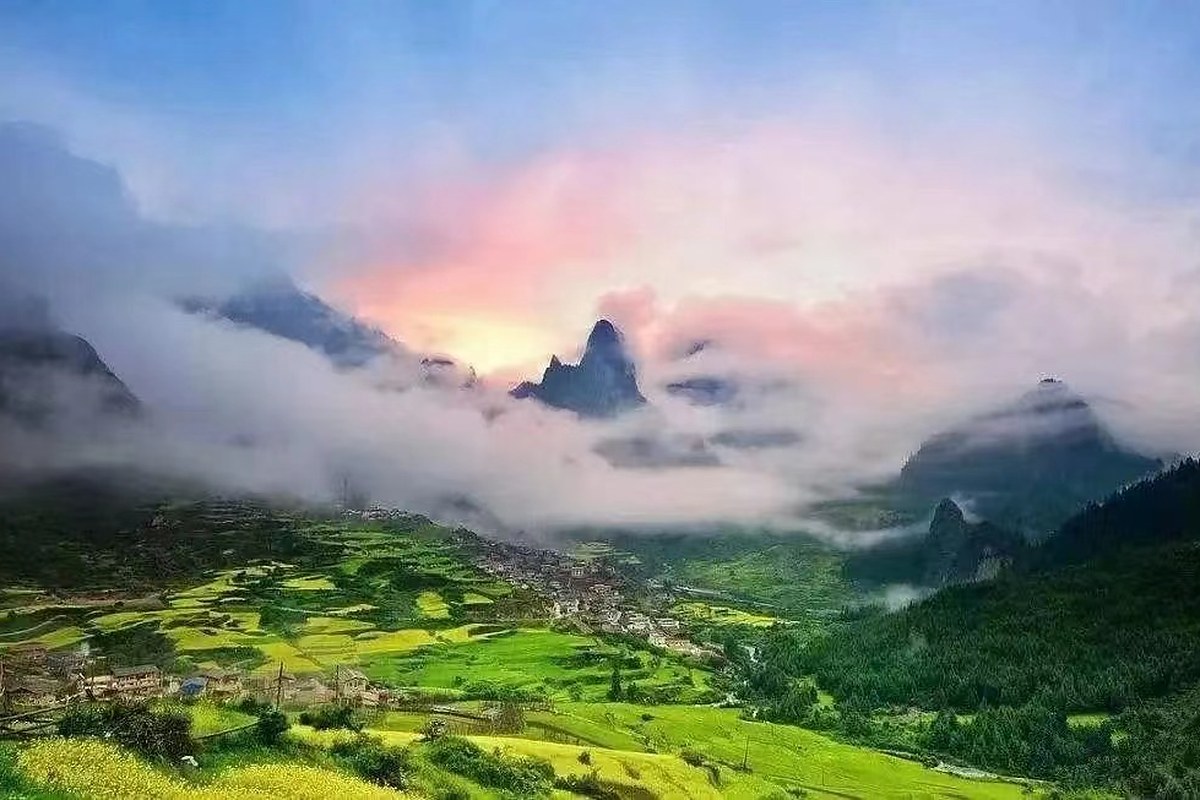
Then south to Gahai Lake, a shallow alpine wetland full of birds, and on to Langmusi, a small town straddling the Gansu-Sichuan border at about 3,300 m, with two monasteries and the source of the Bailong River. Walk the gorge path above the town in the late afternoon; the light on the red cliffs is worth it.
One thing I insist on: do not go to the sky-burial site as a spectator. It is a funeral, not an attraction, and turning up with a camera is disrespectful. If guests ask about it, we talk about it in the car instead.
What I eat: tsampa (roasted barley flour kneaded with butter tea) if someone wants to try it, plus a simple noodle soup – at 3,300 m a heavy dinner is a bad idea. Where I sleep: Langmusi town. Ask for a room with heating; nights are cold even in midsummer.
Day 3 – Into Zhagana: the stone box village
The drive from Langmusi to Zhagana is short but the arrival is not something I can prepare people for. The road turns a corner and there it is: a village of wooden houses and flat fields enclosed by enormous grey limestone walls, like a stone box someone set down in the valley. The Tibetans call it a “stone city”; Joseph Rock, the botanist-explorer who passed through in the 1920s, wrote about it in a way that made the place famous in the West long before it was famous in China.
We check into a village guesthouse, then walk slowly. The four hamlets – Dongwa, Yeri, Dari and Daiba – sit at different heights, and the fields between them are worked by hand. In the afternoon I take guests to the Fairy Beach (Xian Nü Tan) meadow, an easy walk with the whole stone wall facing you. Go late, when the light comes sideways across the rock.
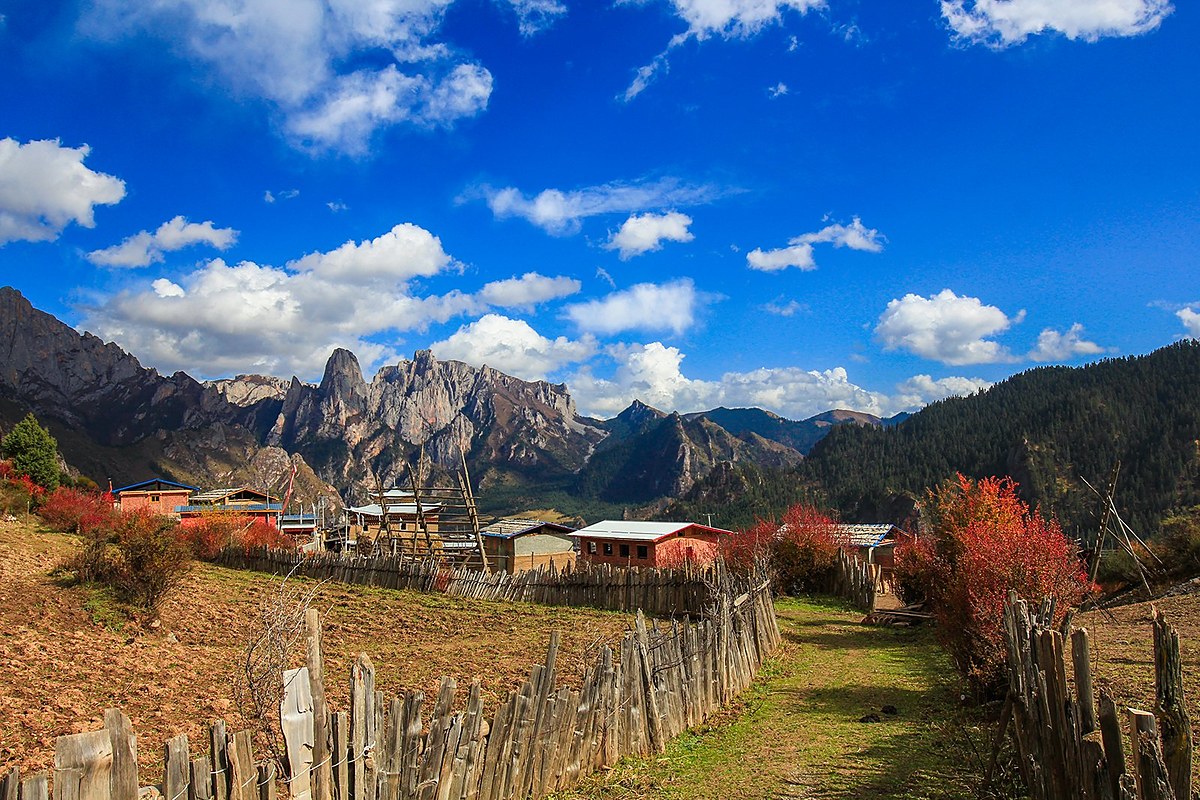
Where I sleep: inside the village. This is non-negotiable for me if you want the dawn – the guesthouses are simple (thin walls, shared facilities in some, limited hot water), but you wake up inside the view. What I eat: a home-cooked dinner of potatoes, yak meat, barley and local greens at the guesthouse. It is the most memorable meal of the five days for most people, and it will not appear on any menu app.
Day 4 – A full day in Zhagana, and why I give it two nights
Dawn first. If there has been rain or a cool night, mist pools in the valley and moves between the stone walls while the village wakes – smoke from the cooking fires, someone driving cattle up the track, a dog barking somewhere above you. I take guests to the viewing platform above Dongwa and then, honestly, I stop talking. Half an hour of that and people are usually ready to just sit.
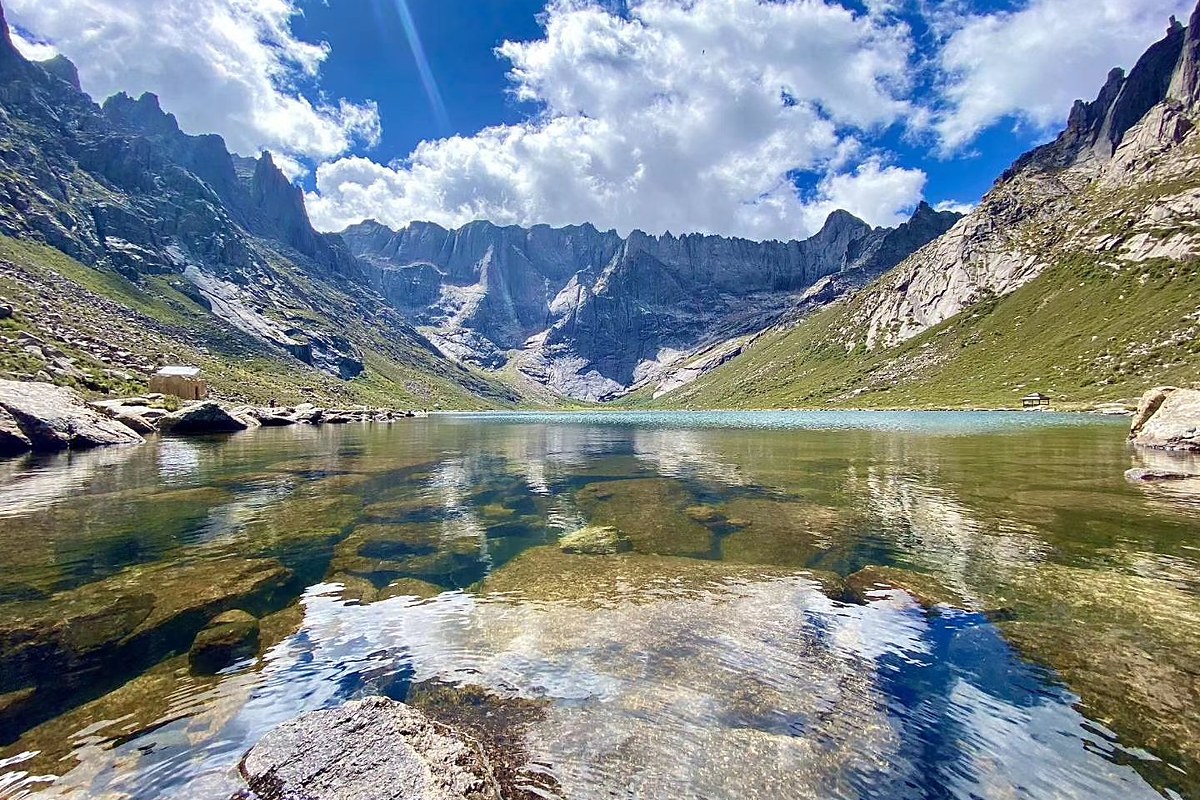
Later, a longer option: the walk up toward the Rock viewpoint / Tiger Mouth section, or a gentle circuit through the hamlets and fields. Nothing here is technically difficult, but remember you are at about 3,000-3,300 m – a stair flight feels different. I carry water, go slowly, and keep the afternoon free. Most operators give Zhagana three hours between two long drives; giving it a whole day is the decision that turns this from a photo stop into a place you have been.
What I eat: guesthouse breakfast of barley bread and yak butter tea, then a noodle lunch in the village. Where I sleep: a second night in Zhagana. Yes, two nights in a simple room – I have never had a guest complain by the second morning.
Day 5 – Hezuo’s Milarepa Pavilion, then back to Lanzhou
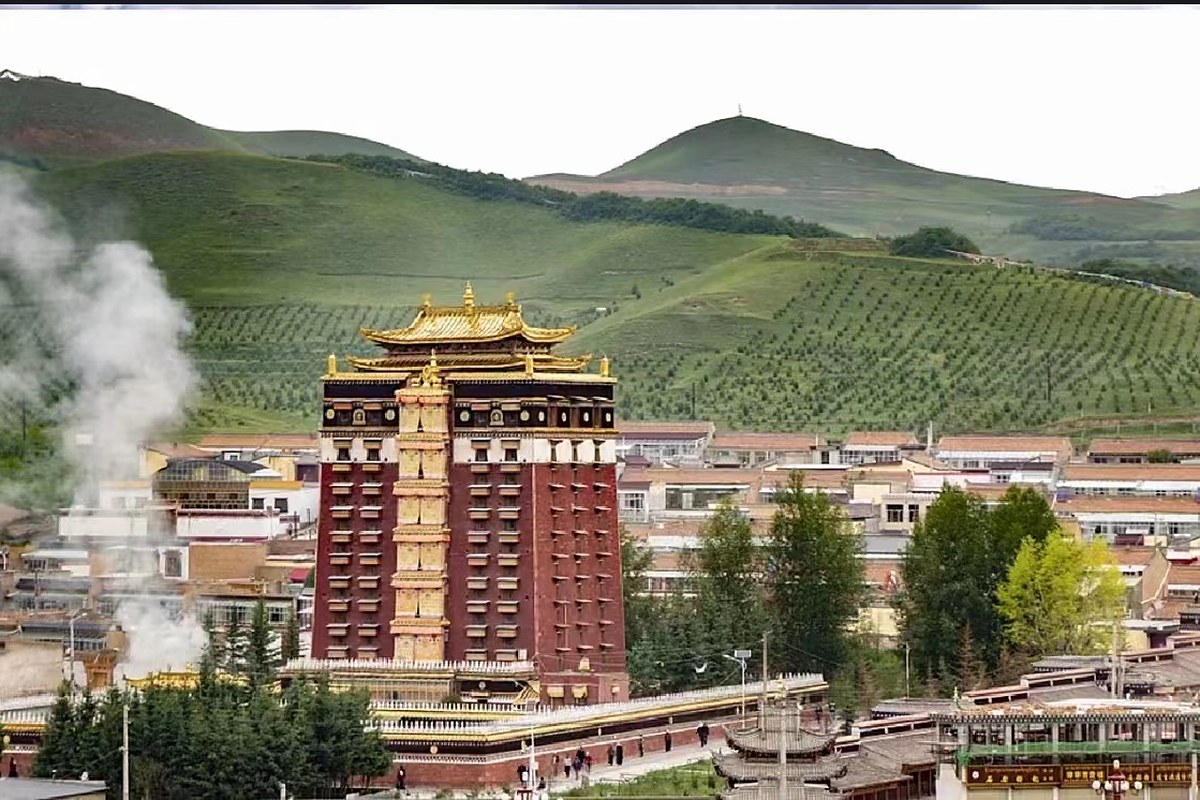
We leave after the mist has cleared and drive north through the grasslands to Hezuo, where the Milarepa Buddhist Pavilion – a striking nine-storey tower – is worth an hour. It is unusual architecture for this region and a good last note before the landscape returns to loess hills and Hui noodle shops. Then back to Lanzhou by late afternoon for the airport or an evening bowl of beef noodles, which after four days of barley and butter tea tastes like coming home.
Where to stay, and the trade I make in Zhagana
Xiahe: a town hotel within walking distance of Labrang, with heating. Langmusi: small guesthouses, again check the heating and hot-water hours. Zhagana: village homestays, basic but with the view from your window. That is the one place I will knowingly book a less comfortable room, because the dawn is the reason for the trip. If a traveller needs a reliable hot shower and a proper bed more than a photograph, I put them in a better hotel in Diebu county and drive in early – but I tell them exactly what they are trading away. In July and August, book Zhagana four to six weeks ahead; there are not many rooms and the whole valley fills. Request non-smoking rooms everywhere, and pack a fleece even in summer.
Food I would order again
- Tibetan momo and yak meat in Xiahe, with a bowl of thick yak yoghurt.
- Butter tea – salty and oily, an acquired taste, and genuinely warming at 3,000 m.
- Tsampa (roasted barley flour with butter tea) – worth trying once, in someone’s home.
- Fern-root pig (jue ma zhu) and highland potatoes – local Gannan specialities.
- Linxia lamb soup and flatbread on the drive in, and Lanzhou beef noodles on the way out.
- Qingke barley wine if offered – and go easy on it at altitude.
Vegetarians do surprisingly well here: potato, barley, greens and noodle dishes are staples. If you do not eat meat, tell me before the trip so the homestay cooks know. And go light on alcohol at 3,000 m – it hits harder and worsens poor sleep.
Mistakes I see first-timers make in Gannan
- Calling it “Tibet lite” and rushing it. the value here is slowness and access, not altitude records. Two nights in Zhagana is not a luxury.
- Walking the prayer corridor anti-clockwise or photographing monks close-up without asking. go clockwise, keep the camera down in chapels, ask before portraits.
- Treating the sky-burial site as a viewpoint. it is a funeral. I talk about the custom in the car, and we do not go.
- Underestimating 3,300 m. a mild headache and broken sleep are common on the first two nights. Water, no alcohol, light dinners, no big hike on arrival day.
- Booking the cheapest Zhagana room in peak season. thin walls and no heating at 3,000 m make the dawn a lot less magical.
- Buying “antique” thangkas, caterpillar fungus or “Tibetan silver” from a roadside pitch. polite no, and let your guide handle it.
- Packing for summer only. July afternoons are mild and dawn is close to freezing. Fleece, shell, hat, high-SPF sunscreen – UV is strong at this altitude even when the air is cold.
Practical notes
Altitude: roughly 2,900 m in Xiahe, up to about 3,300 m at Langmusi and the Zhagana viewpoints. Mild headache, dry mouth and broken sleep are normal early; descend and seek help if a headache persists or there is chest tightness or difficulty breathing. Anyone with a cold should postpone the higher sections. Documents: carry your passport; some sites and hotels require it for registration, and a few areas near the border have additional checks. Money: set up Alipay or WeChat Pay with a foreign card before arrival and carry cash – village homestays, small shops and toilets are effectively cash-only, and international cards rarely work outside Lanzhou hotels. Phones: Google, WhatsApp and Instagram are blocked on mainland networks; arrange a roaming eSIM or VPN in advance, and download offline maps – signal in the valleys is patchy. Roads: paved but winding; if you get carsick, sit in front, eat lightly and tell me so I can plan more stops. Toilets: basic and often squat-style outside the towns. Crowds: July, August and the first week of October are busy; June and September are my personal favourites.
What this trip actually felt like
On the second morning in Zhagana I was standing at the viewing platform with a guest who had spent the first day asking, very politely, when we would get to the “main attraction”. The mist was moving between the stone walls and smoke was coming up from the houses below, and she said, “Oh. This is it.” And then she laughed, because she had been waiting for a ticket gate. That is Gannan in five days. Nothing is fenced, nothing has a queue, and nobody is performing. You walk a prayer corridor with pilgrims at dawn, eat potatoes at a kitchen table, sleep in a room with thin walls, and wake up inside a mountain. It is not a smaller Tibet and it is not a bigger version of anywhere else. If you want a checklist of famous sights, take the Silk Road. If you want to feel, briefly, like a guest rather than a customer, come here – and give the village two nights, because the first one is just arrival.
The questions people asked me afterwards
“You said ‘two nights in a basic room’ like it’s a selling point. Really?” Really. The guesthouses are simple, and I would rather you know that than discover it at 9 p.m. But the mist happens at dawn, and if you are staying an hour away in Diebu you are already driving while the valley is doing its best thing. I have had exactly one guest say they would have preferred the nicer hotel, and she was honest about being a light sleeper. If that is you, tell me and I will arrange the early drive instead – it is a real trade, not a test of hardiness.
“Do I need to be fit? My knees aren’t great.” Not especially. The prayer-wheel corridor is flat and you can walk as much or as little of its three kilometres as you like. The Zhagana meadow walk is gentle; the higher viewpoint involves stairs and I treat it as optional. The real constraint is altitude, not fitness – at 3,300 m you will feel a flight of stairs more than usual, so we go slowly and I keep the afternoons unscheduled.
“Is it awkward visiting a monastery as a non-Buddhist?” Not if you behave like a guest. Walk clockwise, keep your voice down, ask before photographing people, and do not step over thresholds or point your feet at an altar. Hiring the monastery’s own guide is worth it – you will understand the halls, and the money goes to the institution. Nobody will try to convert you or sell you anything; the most common interaction I see is a monk smiling at someone’s confusion about which way to turn a prayer wheel.
Frequently asked questions
Is Gannan worth 5 days if I have already been to Tibet?
Yes, for different reasons. Gannan is lower (about 2,900-3,300 m), greener and more intimate: working monasteries, village homestays, and no queues. It is not a substitute for Lhasa or the high plateau, but it offers a kind of everyday Tibetan life that the major sites often cannot.
How bad is the altitude in Gannan?
Manageable for most travellers but noticeable. Xiahe is about 2,900 m and Langmusi and Zhagana viewpoints around 3,300 m. Expect a mild headache or broken sleep on the first two nights; drink water, skip alcohol, eat lightly and descend if symptoms persist or worsen.
When is the best month to visit Zhagana?
June to September for green valleys and wildflowers, October for crisp clear light and fewer crowds. July and August are the busiest and priciest. Winter is very cold and some village guesthouses close.
Can I visit the sky-burial site in Langmusi?
I do not take guests there. It is a living funeral rite, not a spectacle, and photographing it is disrespectful. We discuss the custom in the car and visit the monasteries and the river gorge instead.
Do I need a 4WD for this itinerary?
No. The five-day Gannan route uses paved mountain roads and a normal sedan or van is fine. 4WD is only needed for the dedicated overland expeditions along the Joseph Rock Road or to Hala Lake.
Is 5 days enough, or should I take 8?
Five days covers the essential first trip – Labrang, Sangke, Gahai, Langmusi and two nights in Zhagana. Eight days adds Ganjia’s stone peaks and ancient octagonal fortress, Lianbaoyeze’s granite spires, Guane Gou and more time in the villages. Take eight if you want to go deeper rather than wider.
This is the route I described: Hidden Valleys of Gannan – 5-Day Private Tour. For the deeper version see Best of Gannan – 8-Day In-Depth Private Tour, and read Qinghai & Gannan Altitude: What to Expect before you fly.