
My favourite message this season: “Is the eighth day just a way to charge me more?” I like people who ask that directly. The honest answer is that the eighth day does not add a single famous monument – no extra grotto, no better hotel, no famous city. It adds roughly 450 km of empty paved road into the Qaidam Basin, one plain hotel night, and a set of landscapes most visitors to China never see: a highway built on solid salt, jade-green brine ponds, and wind-carved rock mounds rising out of turquoise water. So yes, it costs more. Whether it is worth it depends entirely on whether you are the kind of traveller who gets out of the car in the middle of nowhere and is glad to be there. Here is my full answer.
Short answer: The eighth day on a Gansu-Qinghai Grand Loop does not add another famous monument – it buys you the Qaidam Basin. That means Qarhan Salt Lake’s green brine and salt highway, Da Qaidam’s jade-coloured Emerald Lake, the Nanbaxian yardang formations and usually a proper Water Yardang or desert sunrise. It also breaks up the single longest drive on the 7-day route. If you care about landscape photography and empty roads, the extra day is the best-value day on the whole trip. If you mainly want the Silk Road history and the Mogao Grottoes, seven days is enough.
Here is the moment that makes me argue for eight. We had been driving for two hours through flat grey-brown gobi with absolutely nothing to look at – no villages, no trees, no other cars. Guests had gone quiet and a couple were asleep. Then we crested a shallow rise and there were the Emerald Lake ponds: not blue, not green, but a flat opaque jade that looked like paint spilled into the desert, separated by white salt banks. A woman in the front seat got out, walked to the edge, stared for a while and asked, quite seriously, “Is that real water?” The wind out there is relentless and dry; it splits your lips within an hour and makes your eyes water while the sun is still blazing. Standing on that bank with that colour underneath you and no sound at all except wind is a feeling the 7-day route simply cannot give you, because the 7-day route never goes west of Chaka.
At a glance: what the extra day actually changes
| 7-day route | Xining – Qinghai Lake – Chaka – Qilian – Zhangye – Jiayuguan – Dunhuang |
| 8-day route | Adds a Qaidam Basin leg: Qarhan Salt Lake, Da Qaidam Emerald Lake, Nanbaxian / Water Yardang |
| Extra distance | Roughly 400-550 km, mostly on good paved highway |
| Extra altitude | Nights around 2,800-3,100 m; the highest pass stays near 3,700-3,800 m |
| Extra cost | One hotel night, one vehicle day, two or three scenic tickets |
| What you gain | The emptiest landscapes of the trip, a split long drive, and a less rushed Dunhuang finish |
I should be straight with you about what the eighth day is not. It is not a bonus city, a better hotel or a rest day. It is a long, empty, windy day in the basin with almost no services, and some travellers find two consecutive days like that tiring. I have had guests who would have been happier with seven. But I have never had a photographer regret it. Below is how I actually spend all eight days.
Day 1 – Xining: a deliberately empty afternoon
Xining sits at 2,261 m and most guests arrive off a long-haul flight. We check in, walk a little, eat an early dinner and stop. If people want an hour of context, the Qinghai Provincial Museum or the Hui quarter near Dongguan Grand Mosque. I refuse to drive to a high pass on arrival day, however enthusiastic everyone feels, because the first 24 hours at altitude set the tone for the whole week. What I eat: Qinghai earthen hotpot – mutton, potato and highland vegetables in a copper pot – and yak yoghurt with sugar. Where I sleep: Chengxi or Haihu district, modern hotel with reliable heating.
Day 2 – Kumbum Monastery, then the first sight of Qinghai Lake
Two hours at Kumbum (Ta’er Si) in Huangzhong among butter sculptures, murals and applique hangings, walking clockwise with the monks, no photography inside the halls. The smell in those chapels – yak butter, old incense, cold stone – is one of the things guests describe months later. Then up over the Riyue Mountain pass and down to Qinghai Lake, about 3,196 m.
The first view usually silences the car. The water’s horizon sits too high, there is no tide, and the light is so hard the far shore looks ruled. You step out in July sunshine with a cold wind that makes you lean into it, burning neck and cold fingers at the same time. In July and August the shore is edged with yellow rapeseed. We use designated access points: much of the lakeshore is private pasture, and walking in uninvited ends in a fee negotiation I would rather spare everyone.
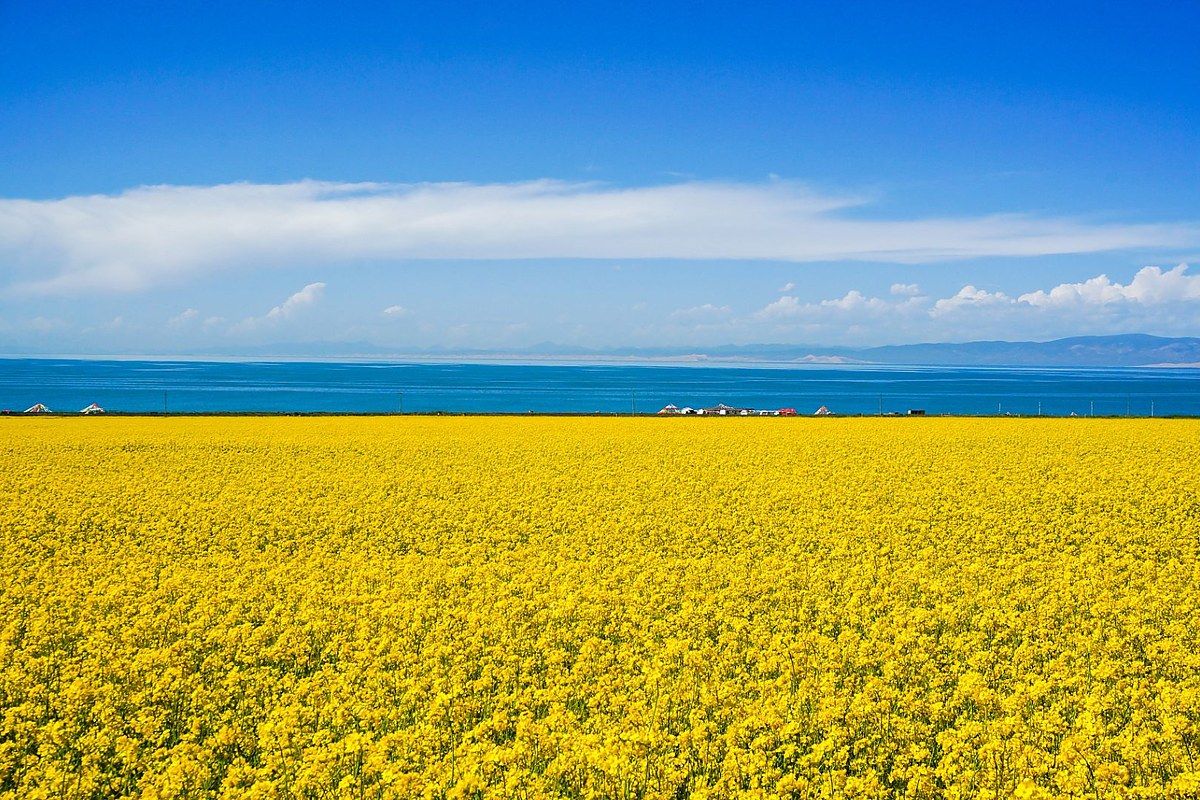
Where I sleep: Heima River if the sky is clear and guests want the sunrise; otherwise a warmer, better room in Chaka town. What I eat: kang guo lamb and torn noodle soup.
Day 3 – Chaka at dawn, then west into the basin instead of north
On the 7-day route this is where we turn north toward Qilian. On the 8-day route we keep going west, and that single decision is the difference between the two trips.
First, Chaka Salt Lake while the air is still. The mirror is a thin film of brine over white salt; any breeze erases it. The shoe covers are thin plastic and tear, everyone gets a little brine in anyway, and ten minutes later salt starts crystallising on your ankles and itching. Kneel low for the shot and the water is a centimetre deep and icy. The glare is physical even with your eyes closed, which is why I hand out sunglasses before anyone argues. On a calm morning the clouds sit perfectly under your feet and people actually giggle at walking on the sky. On a windy one it looks like a wet car park. I check the forecast the night before and never promise the reflection.
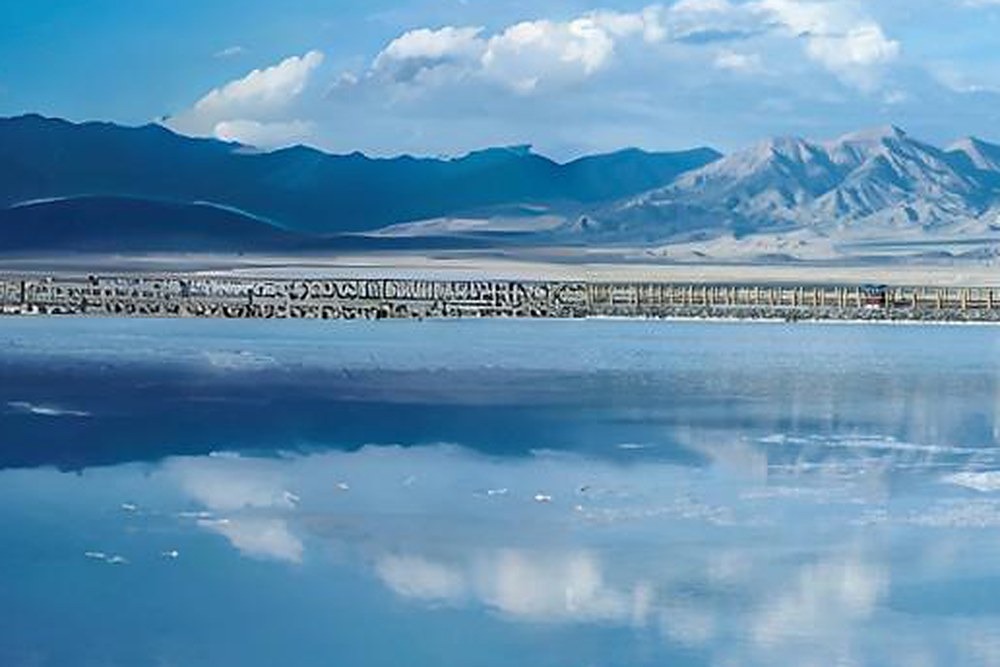
Then the road west to Delingha, about 200 km. It is a transit afternoon and I treat it as one – no paid stops, just the light changing over the basin. Where I sleep: Delingha, a small city with decent business hotels and, crucially, heating.
Day 4 – The Qaidam day: green salt, jade ponds and wind-carved rock
This is the day the eighth day buys. At Qarhan Salt Lake, China’s largest salt lake, the highway itself runs on a bed of solid salt – the “ten-thousand-zhang salt bridge” – and the brine pools sit in shades of pale green that look processed but are not. Salt crystals grow in brittle white flowers along the edges. Stay on the boardwalks: the crust is sharp, the brine is corrosive to camera gear and jewellery, and there is essentially no shade.
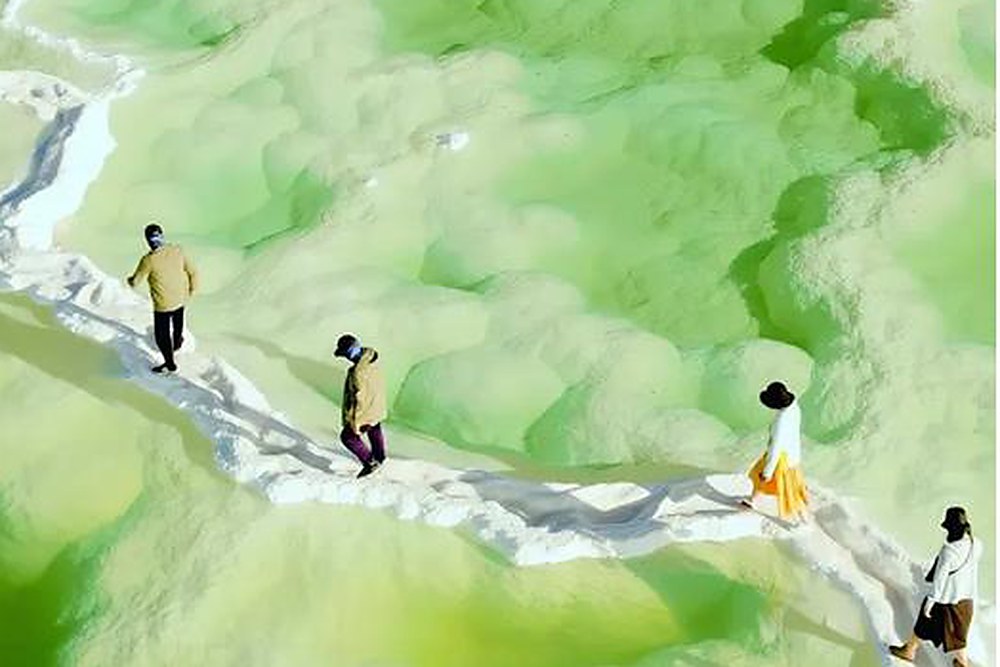
Near Da Qaidam, the Emerald Lake is a cluster of jade and sapphire brine ponds separated by white banks. A drone gives the best overview, but permission rules change by season, so ask at the gate before unpacking one. Then the Nanbaxian yardang – wind-eroded ridges and mounds scattered across the desert, best in low side light – and, when road and time allow, the Water Yardang, where the same rock shapes rise out of turquoise water. On the black volcanic hills near Heidu Mountain the landscape tips into something that genuinely looks extraterrestrial.
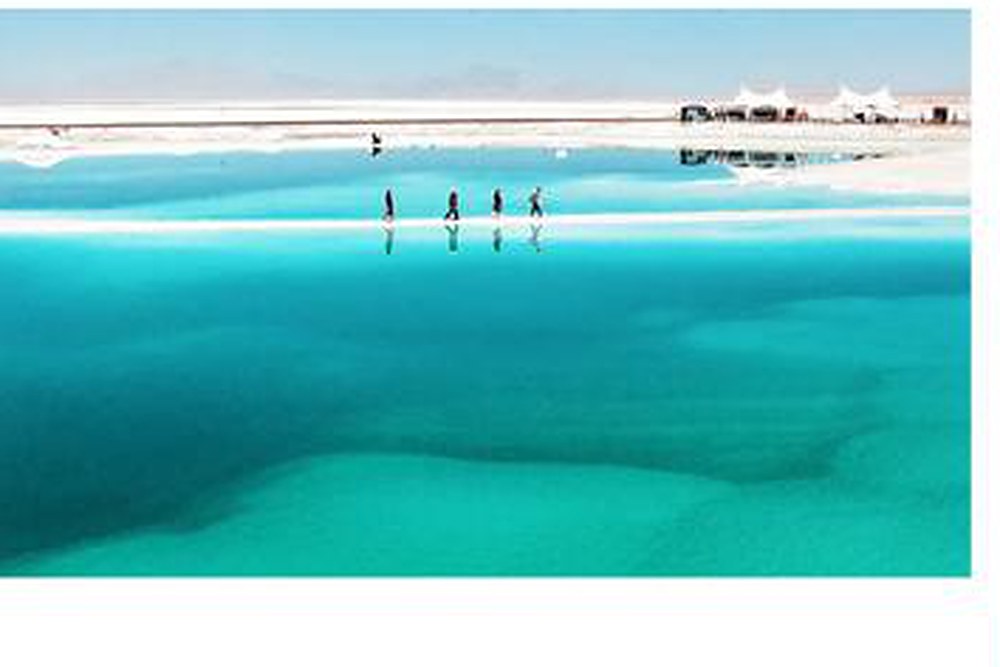
I need to be honest about the physical side of this day. There are long stretches with no shops, no shade, no toilets and patchy mobile signal. The wind is constant and dries you out faster than you notice. I download offline maps before leaving Delingha, fill the tank at every town, carry extra water, and never let anyone wander off toward an unmarked ridge. It is magnificent and it is genuinely remote, and those two facts are the same fact.
Where I sleep: Da Qaidam or Golmud depending on the exact version, around 2,800-3,100 m, in a functional business hotel. I tell guests in advance that the room will be plain; nobody is surprised at 9 p.m. that way.
Day 5 – Back over the passes to the Qilian grasslands
A long drive east and north toward Qilian, crossing passes above 3,700 m. We stop for five minutes at the top, not for a hike – you notice immediately that walking to the edge of the road takes more effort than it should, and there is old snow in the shade even in July. Our driver hands around a thermos of hot water without making a speech about it. Then we descend, and within forty minutes the grey basin has become green grassland with a river bending through it and yak scattered across the slope. Coming off that cold, breathless pass into warm meadow air with the windows down is a bodily relief that has nothing to do with sightseeing. People get sleepy and happy at once.
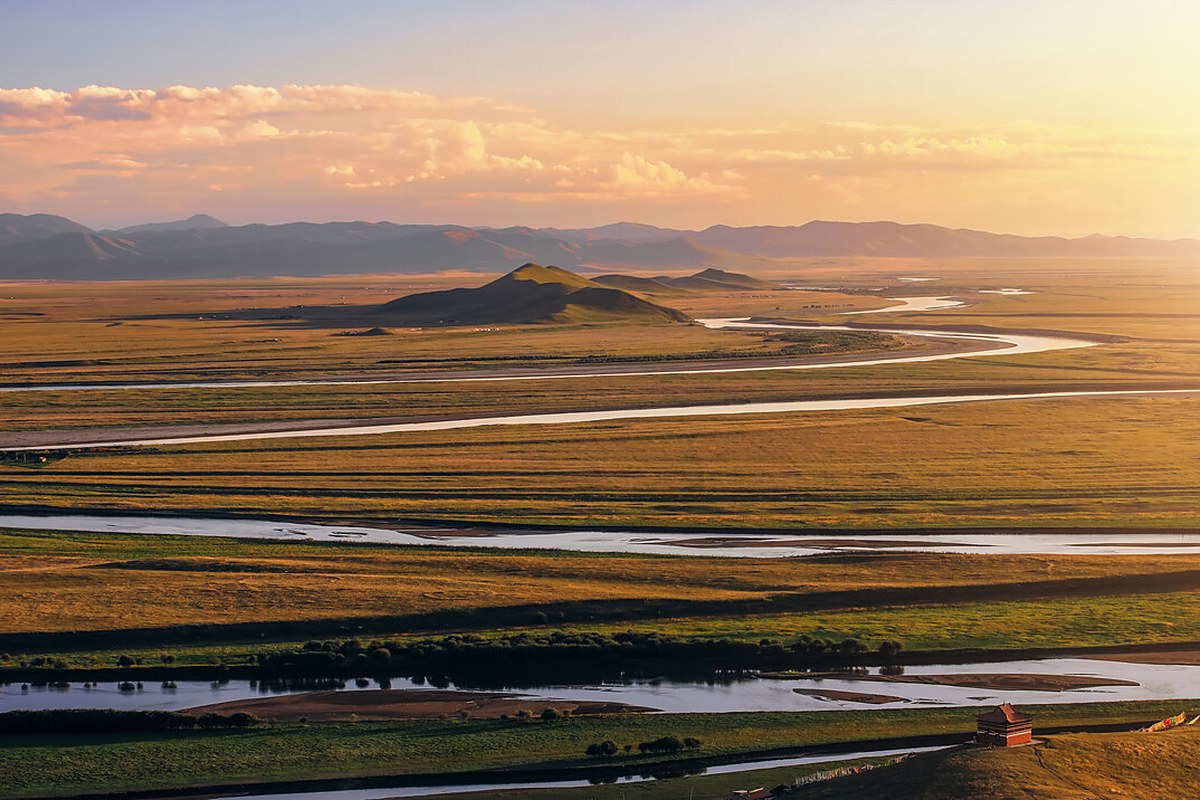
In July the Menyuan valley on this leg can be a solid sheet of yellow rapeseed with the Gangshika snow peak behind it. What I eat: hand-grabbed mutton and a noodle soup in Qilian. Where I sleep: Qilian county or Zhangye.
Day 6 – Zhangye Danxia at sunset
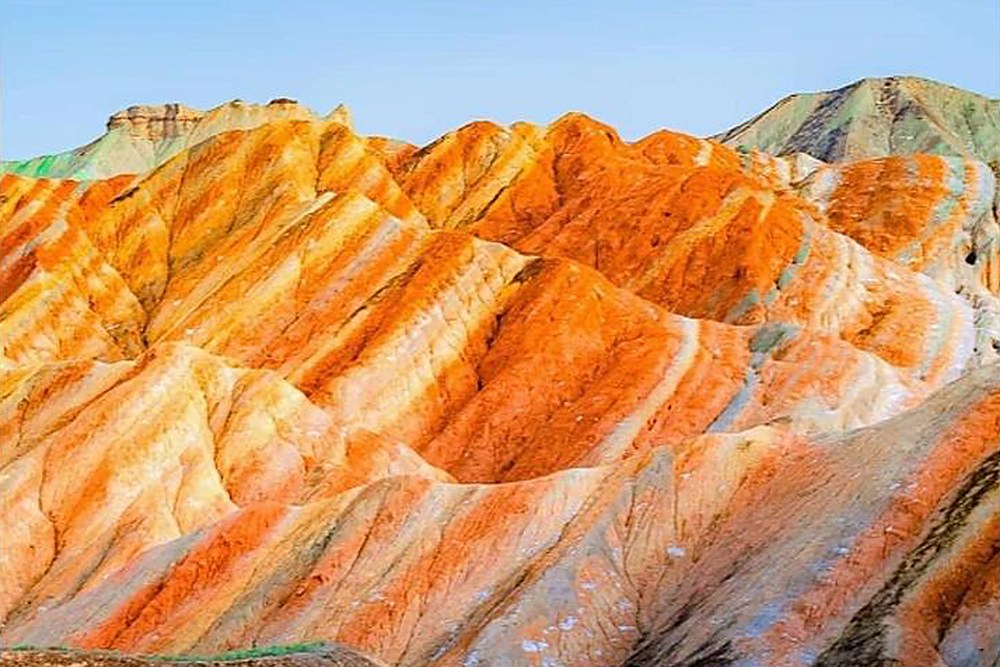
A slow morning – the Giant Buddha Temple and its 35 m reclining Buddha if people want it – then the Zhangye Danxia National Geological Park about 2.5 hours before sunset. West gate, shuttle to platform 4 for the classic layered panorama, then 2 and 1 as the light drops. What always happens on that deck is a sudden quiet: the mineral-stained layers go from dull brick to orange to almost pink in twenty minutes, and the gullies fill with violet shadow. A guest once told me she came for a photograph and got “twenty minutes where I forgot I was holding the camera”. Stay on the boardwalks; the coloured crust is fragile and stepping on it is fined. Do not go at noon.
Day 7 – Jiayuguan and the dunes at dusk
Two to three hours at Jiayuguan Pass, western end of the Ming Great Wall: ramparts, inner fort, and the small museum on rammed-earth construction. I have stood there in wind strong enough that I had to hold my hat and shout, while a guest looked west at the empty gravel and said, “So this is where it just… stops.” You feel the entire oasis logic of this route at that rampart – a line of meltwater off the Qilian range, a chain of towns, and then nothing.
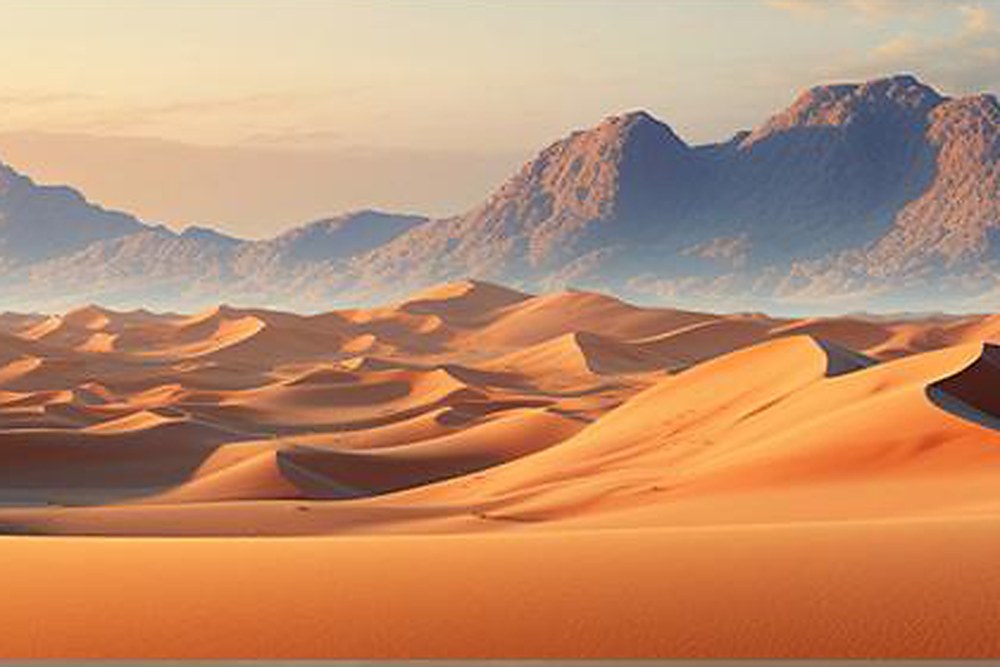
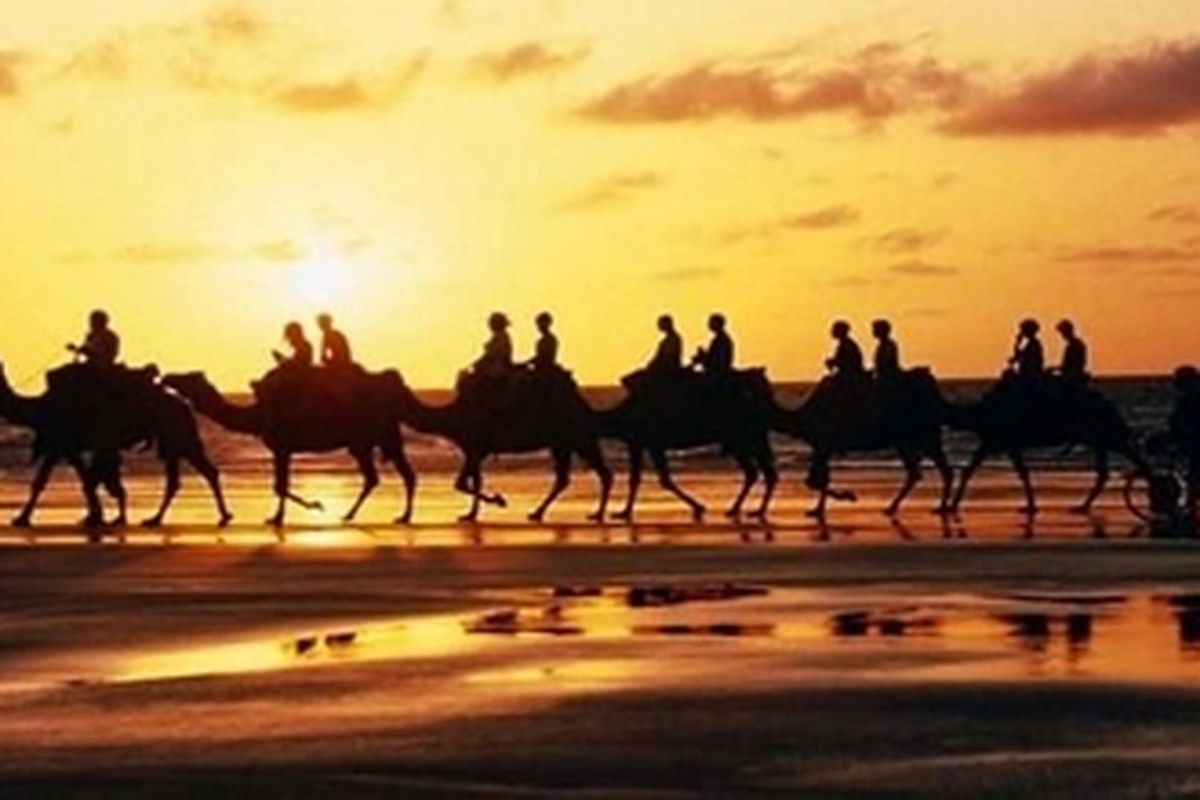
Then about 370 km to Dunhuang and, around 5 p.m., Mingsha Mountain and Crescent Moon Spring. The sand is warm underfoot at six and cold twenty minutes after sunset; the wind makes a low hiss against the dune face; one camel bell passes somewhere behind you and fades. When the lights come on around the spring pavilion, the water is a small impossible strip of dark green in all that sand. I buy the re-entry ticket for a dawn return. Fine dune sand gets into camera bodies and phone ports, so zip bags come out before anyone starts shooting.
Day 8 – Mogao Grottoes, then out
Dawn at the dunes if the group is up for it, then an 8 a.m. slot at the Mogao Grottoes. I never explain the best bit in advance: the guide opens a door, you file into a small dark chamber, a shielded torch comes up and a face painted thirteen centuries ago appears out of the black, calm and intact, looking straight at you. The air is cool, slightly dusty, smelling of old mineral pigment. Photography is forbidden inside the caves, and I think that is why people remember those eight caves more clearly than the museum panels afterwards. Standard tickets include two films, a guided visit to eight to ten caves and the exhibition centre; the Digital Centre’s replicas are where you take pictures. Then the airport, with the Dunhuang Museum as an option for a late flight.
Where to stay on the 8-day version
Xining: Chengxi or Haihu district. Lake night: Heima River for the sunrise, basic guesthouses and thin walls; Chaka town or Jiangxigou for a real bed. I choose from the forecast and from how well the guest slept. Delingha, Da Qaidam / Golmud: functional business hotels – ask about heating and hot-water hours and request non-smoking rooms. At 3,000 m a cold room compounds the altitude. Qilian / Zhangye / Jiayuguan: solid Chinese 4-star in town, about US$45-90 a room in normal weeks. Dunhuang: near Shazhou night market, or a dune-road courtyard hotel on the last night only, when there is no early grottoes transfer. Book lake-area and Dunhuang rooms several weeks ahead for July and August.
Food I would order again
- Qinghai earthen hotpot and kang guo lamb – the two plateau dishes I never skip.
- Hand-grabbed mutton in Qilian, yak yoghurt with sugar, ga mian pian torn noodle soup.
- Zhangye cuo yu zi and chao pao; Jiayuguan charcoal lamb skewers.
- Dunhuang donkey meat yellow noodles and cold apricot peel drink.
Vegetarians should warn me before the trip – outside Xining this is a heavily meat-based cuisine and vegetable broth is not a safe assumption. Qinghai Lake’s naked carp is a protected species; any restaurant offering it should be avoided.
Mistakes I see on the longer loop
- Treating the Qaidam day as a quick stop. the sites are far apart with no services. Extra water, offline maps, sun protection and a full afternoon are the minimum.
- Flying in and going straight to a high pass. the slow arrival day is the most valuable thing I build into this itinerary.
- Waiting hours at Chaka for a mirror the wind will not allow. check the forecast, shoot what is there, move on.
- Hiking at the 3,700 m passes. a five-minute photo stop is fine; a scramble up a ridge is how people spend the evening with a headache.
- Booking Mogao late. timed, passport-linked, gone in peak weeks. These are the first tickets I secure.
- Packing for one climate. near-freezing dawn grassland and 35 C dunes in the same week. Fleece, shell, hat, high-SPF sunscreen.
- Assuming cards and signal everywhere. set up Alipay or WeChat Pay with a foreign card before arrival, carry cash, download offline maps in Xining.
Practical notes
Altitude: 2,261 m in Xining, about 3,196 m at Qinghai Lake, roughly 2,800-3,100 m on the basin nights, up to about 3,800 m at the passes, down to about 1,100 m in Dunhuang. Mild headache, broken sleep and breathlessness on stairs are common early: water, no alcohol, light meals, and no hot shower in a cold room on night one. Persistent headache, chest tightness or difficulty breathing means descend and get medical help. Anyone with a cold should delay the high sections. Driving: two days exceed 350 km; I use rested licensed drivers and never stack paid sightseeing onto the basin day. Money: international cards rarely work outside large city hotels; cash for small shops, toilets and fees. Phones: Google, WhatsApp and Instagram are blocked on mainland networks – arrange a roaming eSIM or VPN in advance. Documents: carry your passport daily. Drones: permission required at most parks and near basin installations; ask at each gate. Toilets: basic and often squat-style on long legs; tissues and sanitiser in the day bag. Crowds: avoid the first week of October.
What this trip actually felt like
By the eighth morning in Dunhuang, people are quietly wrecked in a way I have come to recognise: dry sinuses, salt in the seams of a bag, a strip of sunburn where the hat brim missed, and a strange reluctance to get out of the car at one more viewpoint. Then we walk into that first Mogao cave and the torch comes up, and the tiredness drops away for twenty minutes. Over the final lunch, guests almost always start replaying the trip in the wrong order – the jade ponds, the thermos at the pass, the river bend, the wind at Jiayuguan, the cold sand at dawn – because what they remember is not a list of sites but how completely the ground kept changing under them. That is my honest answer to “is eight better than seven”: the extra day does not give you another headline, it gives you the emptiest, strangest stretch of the whole route and the breathing room to still be awake for the grottoes at the end. Seven days covers the famous places. Eight days is the version where you actually feel how far you have come. If you can only do seven, do seven – but do not try to make up the difference by starting the driving on arrival afternoon.
The questions people asked me afterwards
“Are the salt lakes really that colour, or is it all edited?” They really are that colour – dissolved minerals and algae in very dense brine, plus a white salt bed underneath, which is what makes the green read so unnaturally flat. A woman on my last run walked to the edge, stared for a while and asked me, completely seriously, whether it was real water. That said, the colour changes with season, water level and light, and a strong polariser can make it look fake in a photograph. Stay on the marked banks: the crust is sharp and the brine is corrosive to camera gear and jewellery.
“Will the extra day make the altitude worse?” Not meaningfully. Basin nights sit around 2,800-3,100 m and the highest pass remains near 3,700-3,800 m – essentially the same as the seven-day route. What actually decides how you feel is the first 24 hours in Xining: a slow arrival day, water, no alcohol, and no hot shower in a cold room on night one. I have never had a guest struggle because of the Qaidam day specifically.
“If we skip it, will we regret it?” If you love empty roads and landscape photography, probably a little – especially once you see someone else’s Emerald Lake photo. If you are here for the Silk Road, the grottoes and the fort, honestly no: the seven-day loop is a complete, well-paced trip and I would never call it compromised. What I would not do is try to squeeze the Qaidam stops into seven days. That turns Dunhuang into one rushed afternoon, and Mogao is the one place on this route that deserves an unhurried morning.
Frequently asked questions
Is the 8-day Grand Loop better than the 7-day version?
For landscape photography and anyone who likes empty roads, yes. The extra day adds the Qaidam Basin – Qarhan Salt Lake, Da Qaidam Emerald Lake and the yardang formations – and splits the longest drive. If your priority is Silk Road history and the Mogao Grottoes, seven days covers everything essential and the eighth day is optional.
What exactly does the extra day add?
Roughly 400-550 km of paved highway, one hotel night, and two or three scenic tickets. In exchange you get green brine pools, jade salt ponds, wind-carved yardang ridges and a less rushed finish in Dunhuang. It does not add a city or a rest day.
Is the Qaidam day physically difficult?
Walking is easy, but it is a long, remote day: little shade, patchy signal, no shops or proper toilets for stretches, constant dry wind and strong UV. I carry extra water, download offline maps and keep it to one unhurried circuit.
Will the extra day make altitude sickness worse?
Not meaningfully. Basin nights sit around 2,800-3,100 m and the highest pass remains near 3,700-3,800 m – similar to the 7-day route. The bigger factor is still a slow first 24 hours in Xining.
Can I add the Qaidam stops to a 7-day trip instead?
Not comfortably. Doing so means either cutting the Qilian grasslands or turning Dunhuang into a single rushed day. If the salt lakes matter to you, take the eighth day; if they do not, the 7-day route is the cleaner trip.
Which direction should I run the loop?
Xining to Dunhuang: you start high, finish low, and the landscape builds from alpine lake through salt basin to desert. The reverse works, but puts the altitude at the end when people are already tired.
The route behind this guide: Silk Road Secrets + Qinghai – 8-Day Private Grand Loop. Compare the 7-Day Grand Loop and read Hexi Corridor vs Gansu-Qinghai Grand Loop before deciding.