
A reader wrote: “Jinta or Ejina? I have six days, I hate queues, and I keep seeing the same golden-tree photo everywhere. Which one is actually worth my time?” This is my favourite kind of question, because there is a real answer and it is not the one the internet gives. Everyone says Ejina, as though Jinta were the consolation prize. It isn’t – it is a different photograph altogether: poplars doubled in still water, frost on the boardwalk, and maybe forty people instead of several hundred. So I wrote back with the six-day version I run in October, including the part nobody puts in a brochure: the colour is a loan from the weather, not a date on a calendar. Here is the full reply.
Short answer: Yes – if you want golden poplar trees without the National Day crowds of Ejina, Jinta Poplar Forest is worth the detour. It sits about 90 minutes north of Jiayuguan, has water reflections that Ejina largely lacks, and fits into a 6-day Gansu autumn loop that still covers Zhangye Danxia, Jiayuguan Pass and the Mogao Grottoes. The trade-off: the trees are younger and the forest smaller, so if you want the iconic ancient desert poplars you need the extra day and the longer drive to Ejina.
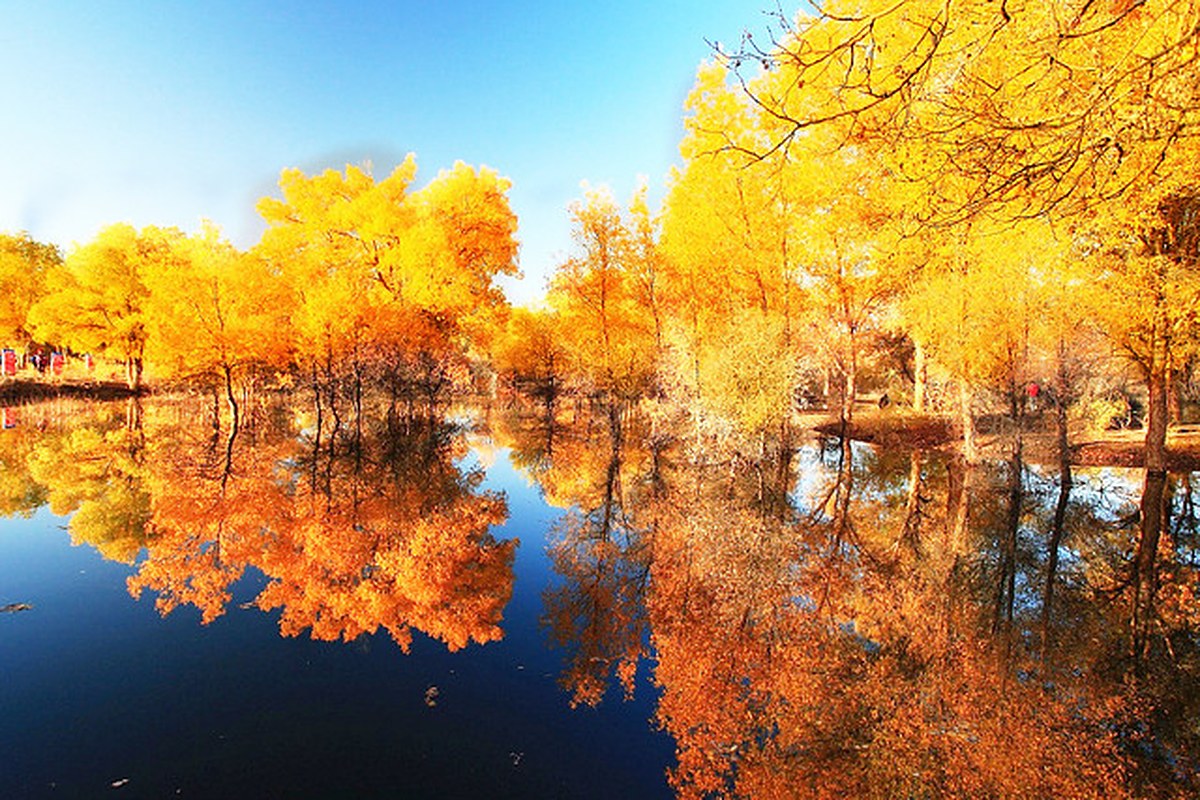
Picture the actual morning, because the reason I drive up before breakfast is entirely about how it feels. It is the first week of October, 7:20 a.m., and there is a thin white frost on the boardwalk at Jinta. My hands are cold enough that I put them in my pockets between shots. The lake has no ripples at all – not a single one – and the poplars on the far bank are doubled perfectly in it, so clean that for a second you cannot tell which half is the tree. There is no one else on the walkway yet. The only sound is a dry leaf coming down somewhere behind me. Then, about twenty minutes after sunrise, the light gets under the canopy and the gold goes from flat yellow to something almost luminous, and the whole grove seems to switch on at once. I have had guests simply stop mid-step at that point. Two hours later the buses arrive and the wind gets up and the mirror is gone. That is the whole argument for this detour, and it cannot be scheduled for 11 a.m.
At a glance: 6 days in Gansu in poplar season
| Route | Lanzhou – Zhangye – Jiayuguan – Jinta – Dunhuang |
| Peak colour | Early to mid-October in a typical year; it shifts by 7-10 days with the first frosts |
| Detour cost | About 2.5-3 hours of driving plus half a day, from Jiayuguan |
| Crowds | Moderate. Far lighter than Ejina during the first week of October |
| Altitude | 1,200-1,700 m, no altitude concern |
| Best for | Photographers who hate queues, travellers with 6 days, autumn road trips |
I am often asked whether Jinta is a “consolation prize” for people who cannot reach Ejina. It isn’t. It is a different photograph: poplars reflected in still water, with reeds and a lake, rather than gnarled thousand-year-old trees standing in sand. Below is the six-day route I actually run in October, day by day.
Day 1 – Lanzhou to Zhangye
We start with Lanzhou beef noodles and a short walk along the Yellow River at Zhongshan Bridge, then take the high-speed rail west (about 3 hours) with the Qilian range on our left. I prefer the train on this leg; it saves four hours of driving for the days that matter. Evening in Zhangye city: a plate of cuo yu zi, short handmade noodles in gravy, and an early night. Where I sleep: Ganzhou district, in town, not at the Danxia gate.
Day 2 – Zhangye Danxia at sunset, and the Giant Buddha Temple
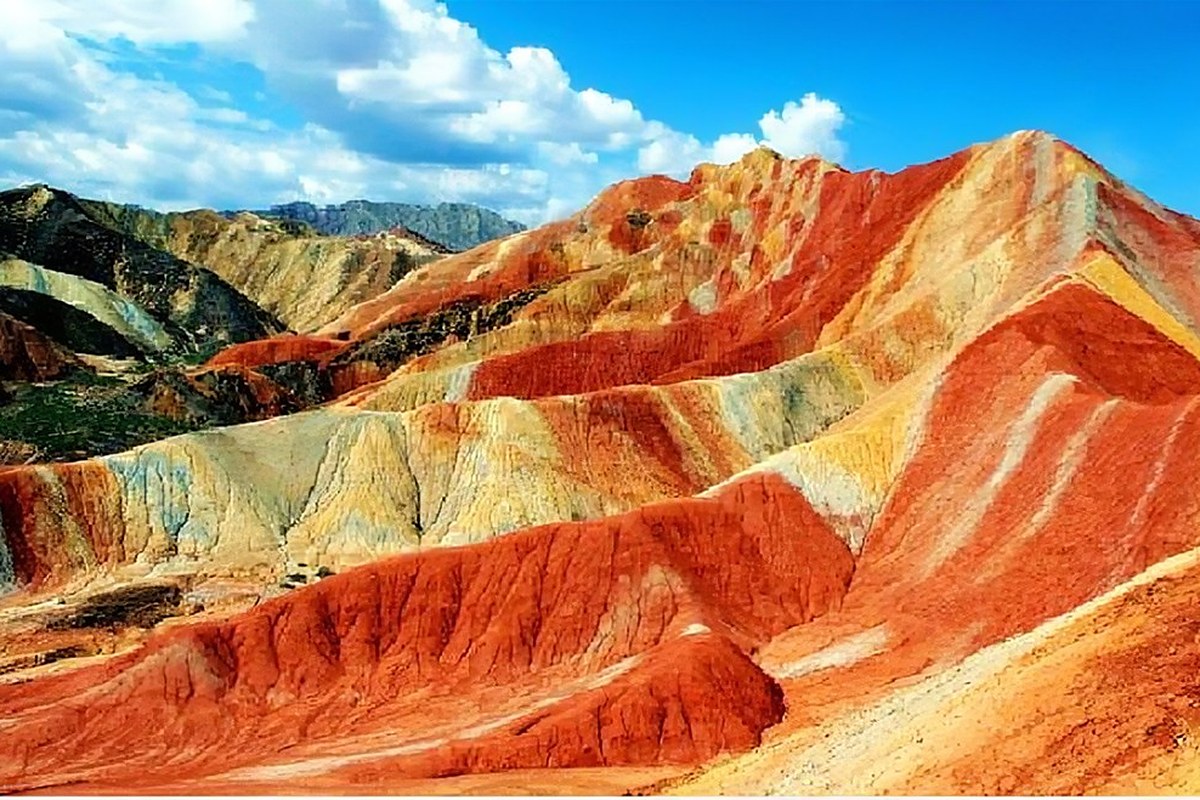
Morning at the Giant Buddha Temple, a Western Xia hall with a 35 m reclining Buddha that most rushed itineraries skip. Then rest, then Zhangye Danxia National Geological Park for the last 2.5 hours of light. West gate, shuttle to platform 4 first for the sunset panorama, then platforms 2 and 1 as the light drops. Stay on the boardwalks – the coloured crust is fragile and walking on it is fined.
What I eat: chao pao (thick fried noodles) in the old town. What I avoid: the restaurants at the scenic gate, which are priced for bus groups.
Day 3 – Zhangye to Jiayuguan: the western end of the Great Wall
A 220 km morning. I give Jiayuguan Pass two to three hours: the ramparts, the inner fort and the small museum explaining the rammed-earth walls and garrison life. With the Qilian snow peaks behind the gate, it is one of the most legible history lessons in China. If the group still has energy, the Overhanging Great Wall section is 8 km away and involves a lot of steps in full sun – optional, never forced.
What I eat: charcoal-grilled lamb skewers at the barbecue street in Jiayuguan, cumin-heavy and ordered by the handful. Where I sleep: Jiayuguan city, so the Jinta detour the next morning starts fresh.
Day 4 – Jinta Poplar Forest: the detour this trip is built around
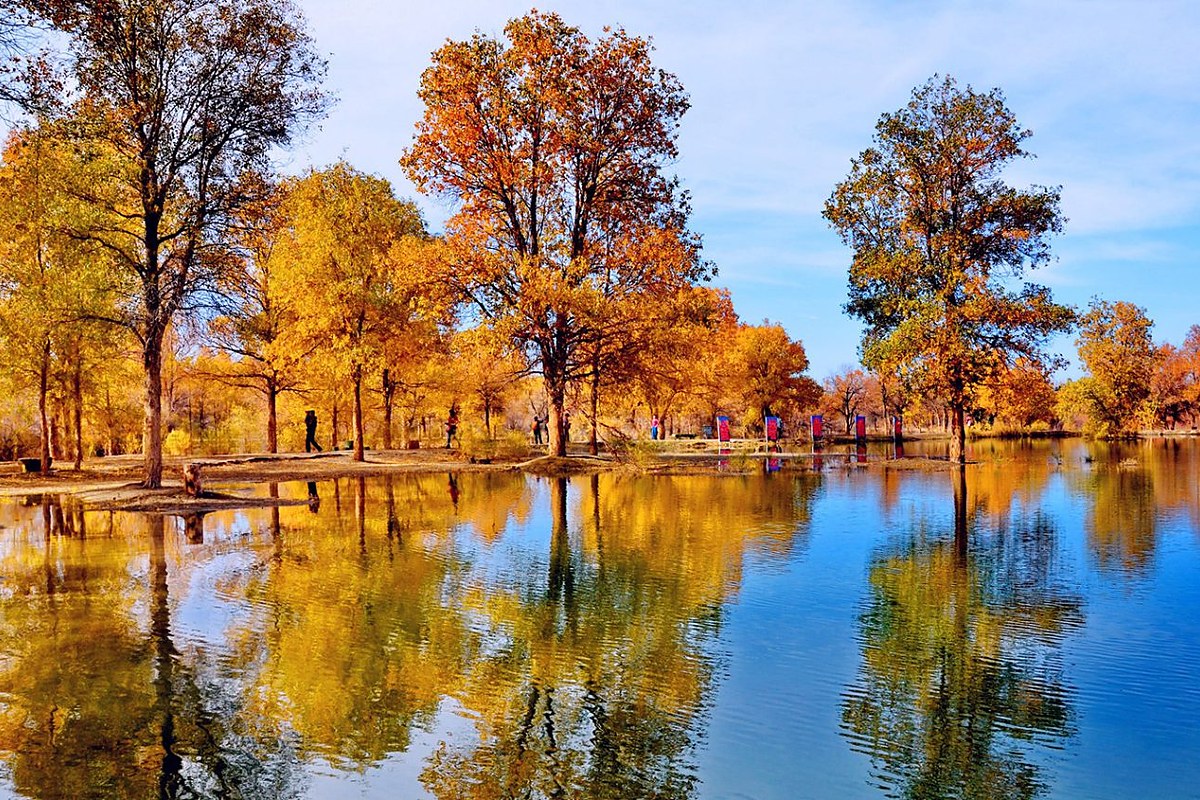
We leave around 7 a.m. for the 90-minute drive north to Jinta Desert Poplar Forest in Jinta County, Jiuquan. I go early for two reasons: the light is low and warm, and the tour buses arrive after 9:30. The core of the park is a lake ringed by Populus euphratica (desert poplar), whose leaves turn a saturated gold for roughly two to three weeks in October. The reflections in the water are the shot; walk the lakeside boardwalk slowly and then cut into the denser grove behind it.
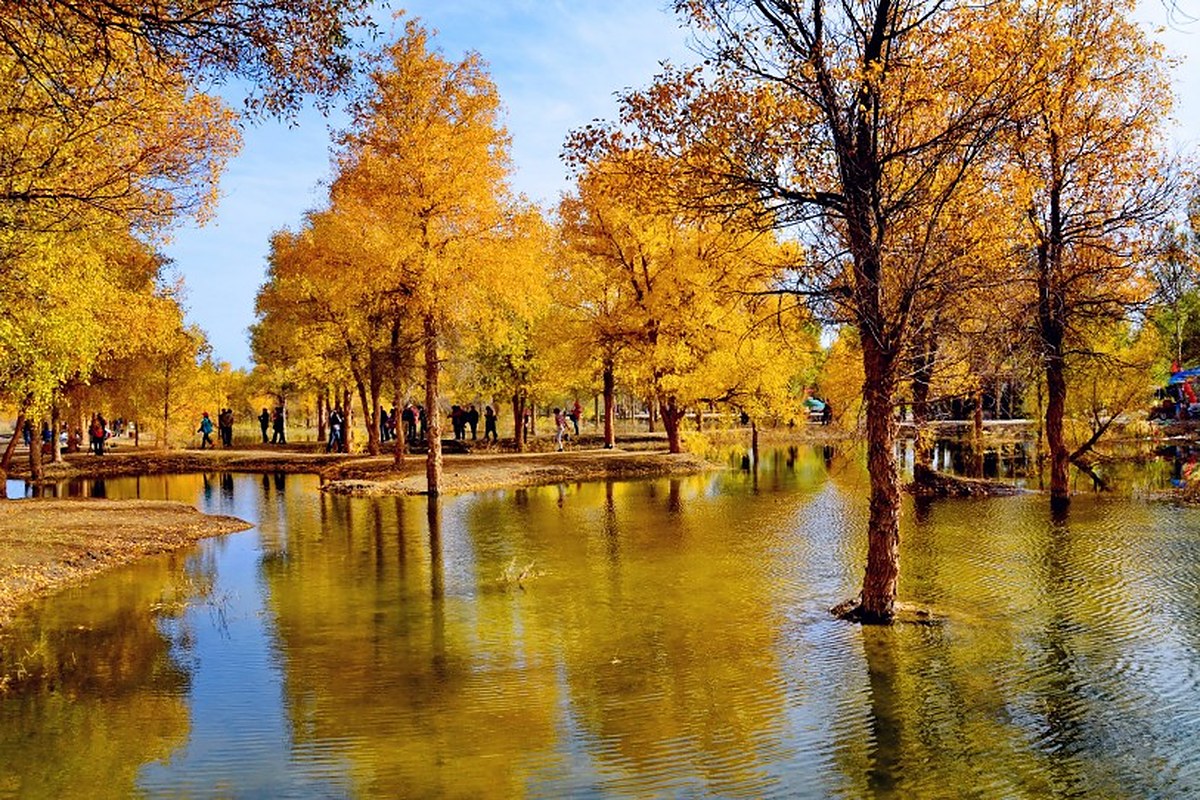
How I play the site: 3 hours, starting at the lake, then the golden corridor of taller trees. A polarising filter helps with the water; a wide lens is useless here, a 50-85 mm is better for isolating trunks. There is a small “forestry” area with older, more twisted specimens – ask at the gate, most visitors never find it.
In the afternoon we drive back toward Jiuquan and continue west. What I eat: Jiuquan’s hand-grabbed mutton and a local noodle soup. If we have time, the Guazhou “Son of the Earth” land-art sculpture is a free 15-minute roadside stop that guests always end up photographing.
What stays with people, though, is not the reflection shot. It is standing under the trees. The leaves are small and they tremble constantly, and when a breath of wind goes through the grove there is a dry, papery rustle that comes from everywhere at once, overhead and behind you at the same time. Hold a leaf up to the sun and it is translucent, almost orange, with the veins showing. The ground is covered in them and they crunch under boots. On one October trip a guest who had been shooting non-stop finally put the camera down, leaned against a trunk and said, “It’s warm in here.” And it was – the grove was a good few degrees warmer than the exposed lakeside, out of the wind. I mention it because nobody puts that in a brochure, and it is the thing people describe to me months later.
Day 5 – Dunhuang: dunes at sunset
We reach Dunhuang by early afternoon and rest through the heat, then go to Mingsha Mountain and Crescent Moon Spring around 5 p.m. I buy the re-entry ticket so we can come back at dawn. Climb the dune by the wooden ladder for sunset, then walk down to the spring pavilion after dark. Fine sand gets into camera bodies and phone ports – I hand out zip bags and a blower brush before anyone starts shooting.
What I eat: Dunhuang donkey meat yellow noodles and a cold apricot peel drink; the Shazhou night market for atmosphere, a side street for dinner.
Day 6 – Mogao Grottoes, then out
An 8 a.m. slot at the Mogao Grottoes: two short films, a guided visit to eight to ten caves and the exhibition centre. Photography inside the caves is prohibited because the pigments are light-sensitive; the replica caves at the Digital Centre are where you take pictures. After lunch, airport or station transfer. If your flight is late, add the Dunhuang Museum rather than a second cave ticket.
Where to stay on a Gansu autumn loop
Lanzhou in Chengguan district by the river; Zhangye, Jiayuguan and Dunhuang in town rather than at scenic gates. A reliable Chinese 4-star runs about US$45-90 a room, rising in October. The one booking rule for this itinerary: reserve Jiayuguan and Jinta-area rooms 4-8 weeks ahead if your trip falls in the first half of October – poplar season is short and the whole region fills at once. Ask for a non-smoking floor; it is the complaint I hear most often. If you want a dune-side courtyard hotel in Dunhuang, put it on the last night, when there is no early grottoes transfer to make.
Food worth ordering in autumn
- Jiayuguan charcoal lamb skewers – the best casual meal on this road, and perfect on a cool October evening.
- Hand-grabbed mutton – plain-boiled grass-fed lamb with salt and garlic.
- Dunhuang donkey meat yellow noodles and apricot peel drink.
- Jiuquan / Guazhou melon – the corridor’s dry climate makes for unusually sweet autumn fruit.
- Lanzhou beef noodles for breakfast, before 10 a.m.
Mistakes I see in poplar season
- Treating the colour window as a fixed date. Peak gold usually falls in early-to-mid October, but the first frost and a single windy night can move or end it. I check local reports a week out and keep the Jinta day flexible.
- Going to Jinta at 11 a.m. harsh light, bus crowds, and wind ruining the reflections. Early morning only.
- Assuming Jinta equals Ejina. Jinta is younger trees and water; Ejina is ancient, twisted trunks in desert sand. Pick based on the photograph you want, not the name you recognise.
- Travelling in the first week of October without reservations. National Day holiday doubles hotel prices and fills the popular groves. If those are your only dates, I shift the schedule to dawn entries and lesser-known sections.
- Leaving Mogao tickets to the end. passport-linked timed slots sell out; they are the first thing I book, before hotels.
- Under-dressing. October days can be 20 C and dune mornings near freezing. A fleece and a shell both come.
Practical notes
Climate: big day-night swings, intense UV even in cool air, and a dry wind that dehydrates you faster than you notice. Altitude: 1,200-1,700 m, so no altitude sickness risk on this route. Documents: carry your passport daily for name-verified ticket entries at Mogao and several parks. Money: set up Alipay or WeChat Pay with a foreign card before arrival; international credit cards are unreliable outside large hotels, and small shops and toilets are cash-only. Phones: Google, WhatsApp and Instagram are blocked on mainland networks – arrange a roaming eSIM or VPN before flying. Photography: drones need permission at most scenic parks; ask before unpacking one. Toilets: on the Jinta and Dunhuang road legs, facilities are basic – tissues and sanitiser in the day bag.
What this trip actually felt like
On my last autumn run, the wind arrived on the fourth afternoon. Not a storm, just a steady northerly, and by the time we walked back to the car the boardwalk had gone from green-and-gold to solid gold, and a whole line of trees had thinned out overnight. An older man who works at the park shrugged at me and said something I think about every year: the colour is a loan, not a date. He was right. You can plan the flights, the hotel, the Mogao ticket down to the hour, and the trees will still decide when they are finished. That is why I keep the Jinta day movable and why I never promise a specific shade of gold. Come for the cold dawn and the Frost on the walkway and the way the light moves through the leaves; if the mirror is there too, that is a gift, not a guarantee. It is a short season and a long drive, and it is still the six days I would choose for myself in October.
The questions people asked me afterwards
“Is the detour worth it if the leaves aren’t at peak?” Honestly? Jinta is less of a gamble than Ejina precisely because it turns a few days earlier and it is only 90 minutes from Jiayuguan – so if the colour is off, you have lost half a day, not two long drives and two nights in an expensive desert town. And even without perfect gold, the lake, the reeds and the empty boardwalk at 7 a.m. are a lovely morning. I keep the day movable and check local reports a week out. I never promise a shade of gold.
“How cold is ‘cold’ at 7 a.m.?” Cold enough that I put my hands in my pockets between frames, and there is usually a thin white frost on the walkway. Then the sun gets under the canopy and within twenty minutes you are peeling off a layer. That swing is the whole October experience here: fleece at dawn, shirt sleeves by lunch, jacket again at the dune sunset in Dunhuang. Pack for all three or you will be uncomfortable twice a day.
“Where would you actually sleep on the lake night?” On this route it is Day 1 in Zhangye city, Day 3 in Jiayuguan, and the Jinta morning is a detour from Jiayuguan – so you sleep in a proper town hotel every night, which is one of the reasons I recommend six days over seven for this version. If you extend north to Ejina, that is where the basic guesthouses and the inflated prices start. Book Jiayuguan four to eight weeks ahead if you are travelling in the first half of October.
Frequently asked questions
Is Jinta Poplar Forest worth visiting instead of Ejina?
If you have six days and dislike crowds, yes. Jinta is a 90-minute detour from Jiayuguan, has lake reflections and far fewer visitors. Ejina has the famous ancient, gnarled desert poplars but needs at least one extra day, roughly five to six hours of additional driving each way, and much earlier hotel bookings.
When exactly do the poplars turn golden?
Usually early to mid-October, with peak colour lasting about two to three weeks. The date shifts with the first frosts, and a strong wind can strip the leaves overnight. I confirm with local reports about a week before departure and keep the day movable.
Can I combine Jinta and Ejina in one trip?
Yes – that is essentially the 7-day version of this route. Six days is comfortable for Jinta plus the classic Hexi Corridor; seven days lets you continue north to Ejina for two nights. Trying to do both in six days means two very long driving days.
Do I need a 4WD for Jinta?
No. The road from Jiayuguan to Jinta is paved and a normal sedan or van is fine. 4WD only becomes relevant on the overland expeditions into the Qilian high passes or Hala Lake.
Is this itinerary good for photographers?
It is one of my favourites for them: three golden-hour commitments (Danxia sunset, Jinta dawn, Mingsha sunset), plus a dawn return to the dunes. The compromise is that you cannot add midday sites without losing the light, so I keep those mornings deliberately empty.
This is the route I run in October: Jinta Poplar Forest & Hexi Corridor – 6-Day Private Tour. For one more day and the ancient trees, see Ejina Poplar Forest – 7-Day Private Tour, and for seasonal planning read Best Time to Visit the Hexi Corridor.