
Someone wrote to me after seeing a photograph of Hala Lake: “Nine days, 4,000 metres, no phone signal. Isn’t that just paying to suffer? What is actually there?” I nearly wrote “yes, a bit” and stopped, because that would be glib. The honest answer is that part of it is genuinely uncomfortable, and that the discomfort is not the point but it is not separable from the point either. So I wrote back with both: the cold, the headache, the wind slapping the tent – and the fact that on the shore I once stood for ten minutes without hearing a single human-made sound, while a herd of Tibetan wild asses watched us from a ridge about half a kilometre away. Here is that reply, with the permit warning first, because it is the one thing people must know before they get excited.
Short answer: Hala Lake is a remote high-altitude lake (roughly 4,077 m) in the Qilian Mountains of Qinghai, reached by unpaved tracks with no settlements, services or reliable signal. A 9-day expedition combines it with the Qinghai Lake, Chaka, Qaidam salt lakes and Qilian grassland sections of the Grand Loop, plus supported camping near the lake. It requires at least two 4WD vehicles, a satellite phone, offline navigation, oxygen and cold-rated camping gear. Access rules for this protected, sensitive area change – permits and current restrictions must be confirmed with the local authority before departure, and the route is adjusted if entry is closed. Best window is June to September.
Read that permit paragraph again before you plan anything. Hala Lake sits in a conservation-sensitive area, and access has been restricted or subject to permission in different years. I confirm current conditions with the local authority before every departure and I will reroute rather than talk my way past a checkpoint. Any operator who promises unconditional access is not someone you should be in a vehicle with for nine days.
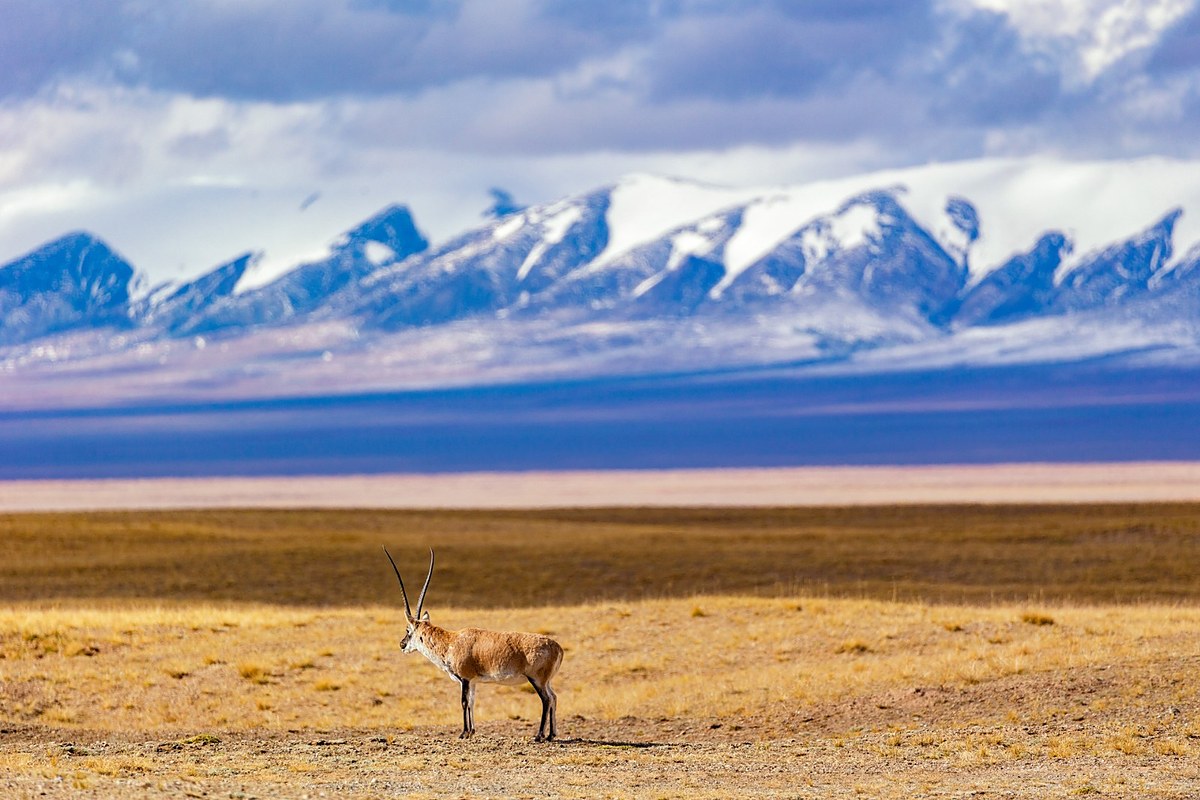
Now the moment. It was about 7 a.m., the second morning near the lake. I had stepped out of the tent into air so cold it made my nose sting, and the first thing I noticed was not the view but the absence of sound – no engine, no voices, no insects, no wind for once. It was so complete that my ears seemed to fill in a faint ringing of their own. The lake was a flat, hard slate blue, then a cloud moved and a pale band of turquoise crossed it. On the ridge behind, a line of Tibetan wild asses stood watching us, perfectly still. I did not take a photograph for several minutes. That is what is “actually there”: not a monument or a viewpoint, but a scale of quiet I have not found anywhere else in China.
At a glance: 9 days to Hala Lake and back
| Route | Xining – Qinghai Lake – Chaka – Delingha – Qaidam salt lakes – Tianjun – Hala Lake – Qilian – Menyuan – Xining |
| Lake altitude | About 4,077 m; several nights 2,800-3,300 m |
| Remote section | No shops, fuel, toilets or reliable mobile signal; unpaved tracks, stream crossings |
| Vehicles | Minimum two 4WDs, maximum eight travellers, satellite phone, recovery gear, extra fuel, water and food |
| Best window | June to September; snow is possible at the lake in any month |
| Non-negotiable | Confirm current access/permit status with local authorities before departure |
Day 1 – Xining: the most valuable day is the empty one
Xining is 2,261 m and guests generally arrive off a long-haul flight. We check in, walk, eat early and do nothing ambitious. I know it feels like a wasted day on a nine-day trip, but the lake is 4,077 m and the first 24 hours at altitude decide how the rest of the week goes. What I eat: Qinghai earthen hotpot – mutton, potato and highland vegetables in a copper pot – and yak yoghurt with sugar. Where I sleep: Chengxi or Haihu district, modern hotel, reliable heating.
Day 2 – Kumbum Monastery and Qinghai Lake
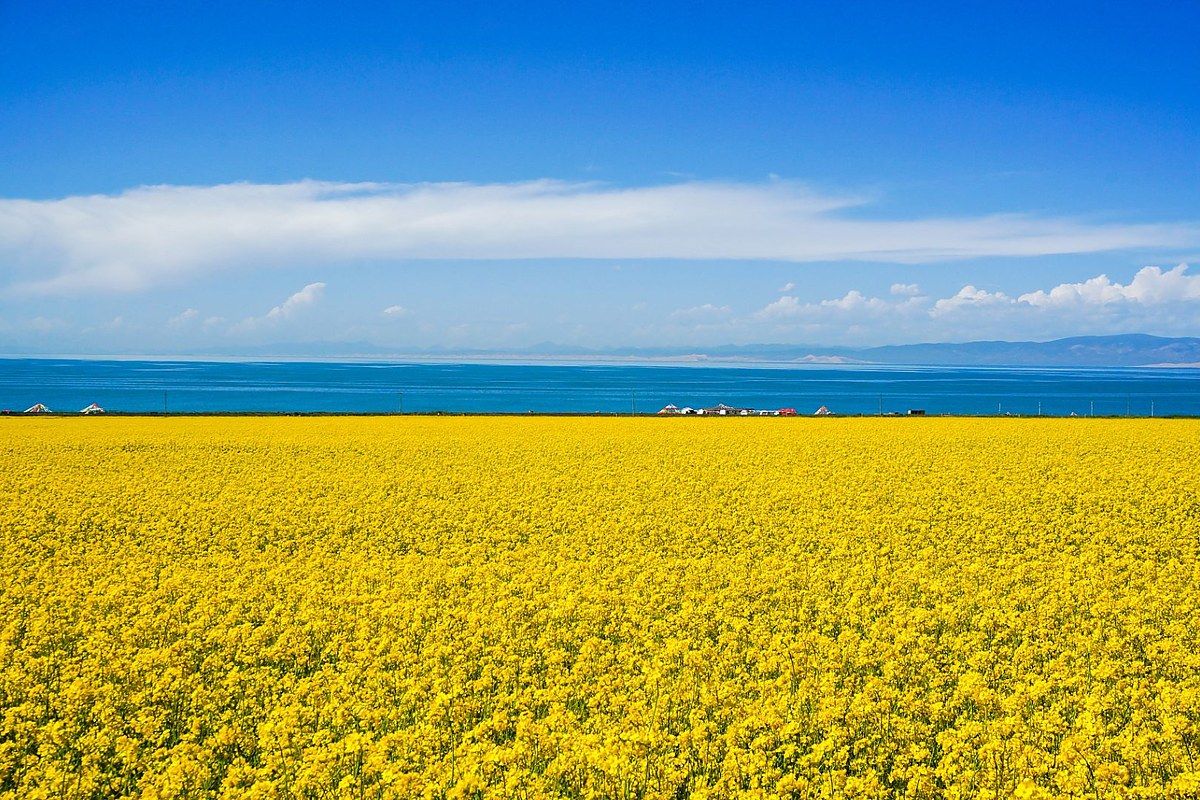
Two hours at Kumbum (Ta’er Si) – butter sculptures, murals, applique hangings, walking clockwise, no photography inside the halls. Then over the Riyue Mountain pass to Qinghai Lake at about 3,196 m. In July the shore is edged with yellow rapeseed; the wind is cold enough to lean into while the sun burns the back of your neck. We use designated access points, because much of the shore is private pasture. What I eat: kang guo lamb and torn noodle soup. Where I sleep: Chaka town or Jiangxigou – a warm room, because we have a big week ahead.
Day 3 – Chaka, then west to Delingha
Chaka Salt Lake early, while the air is still. The mirror needs calm, shallow brine; any breeze erases it. Shoe covers are thin and tear, salt crystallises on your ankles and itches ten minutes later, and the glare is physical even with your eyes closed – sunglasses and high-SPF sunscreen are mandatory. Then about 200 km west to Delingha, a transit afternoon with no paid stops. Before leaving town the next morning, the crew fills every jerry can and rechecks the satellite phone. From here on, “we’ll buy it on the road” is not a sentence anyone gets to use.
Day 4 – The Qaidam Basin: green salt and jade ponds
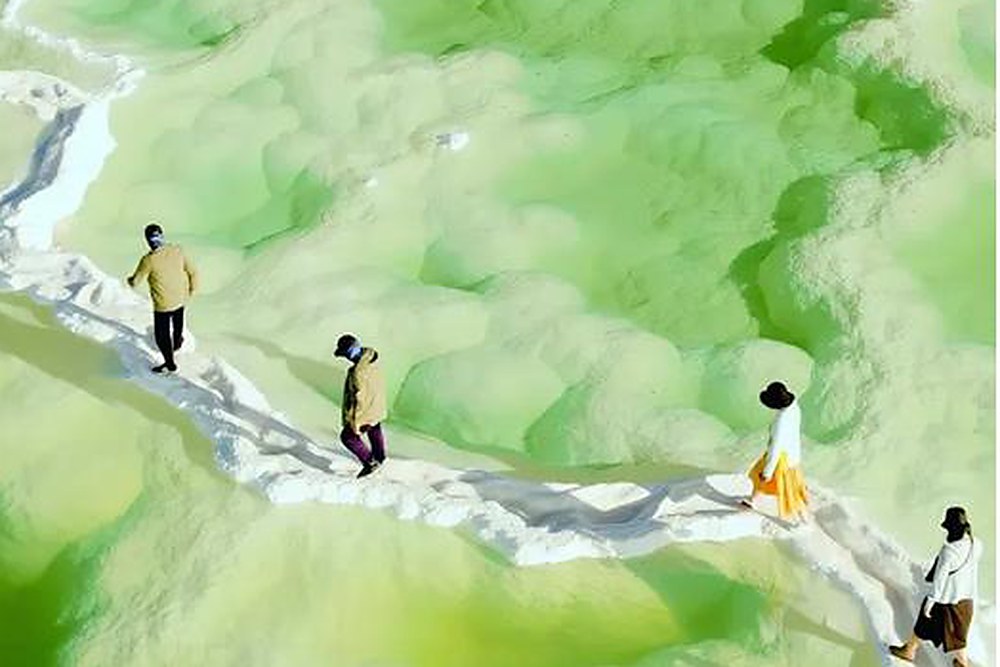
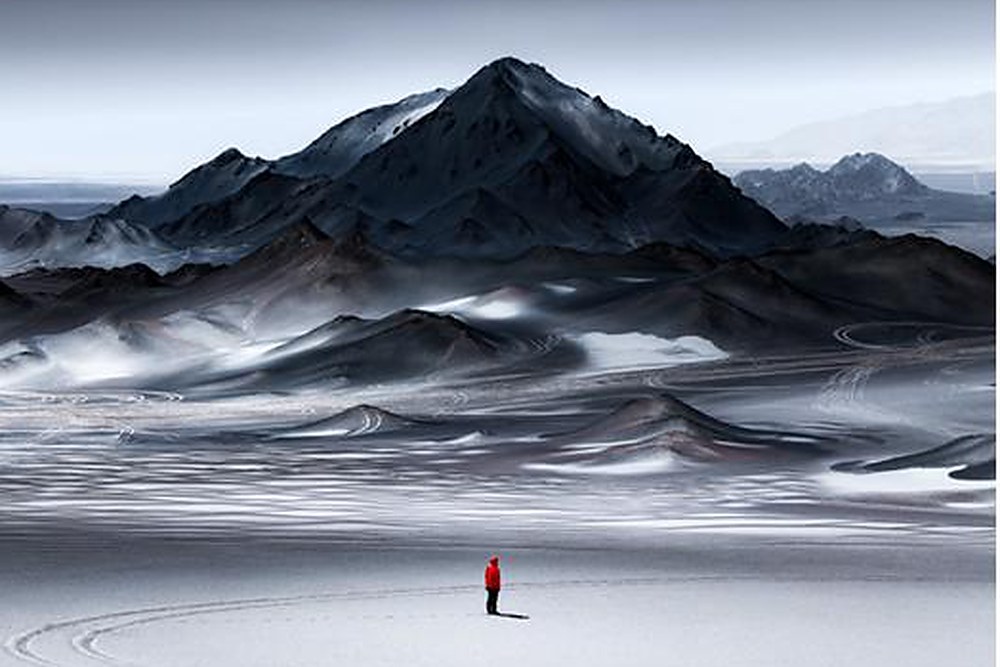
At Qarhan Salt Lake, the highway itself runs on a bed of solid salt and the brine pools sit in pale greens that look processed but are not. Near Da Qaidam, the Emerald Lake is a cluster of jade and sapphire ponds separated by white banks; the Nanbaxian yardang and the dark volcanic hills of Heidu Mountain push the landscape into something that looks extraterrestrial.
This day is also a shakedown for the vehicles and the group: long distances, no shade, patchy signal, constant dry wind. I want everyone used to the rhythm before we turn north into the mountains. What I eat: a simple roadside lunch and, back in Delingha, a proper plate of kang guo lamb. Where I sleep: Delingha again, or a functional hotel further north depending on the confirmed access route.
Day 5 – Into the Qilian high country
This is where the trip changes character. We leave the paved highway behind near the Tianjun side and climb on gravel and earth tracks toward the Hala Lake basin. There are no signposts in English, no villages, no fuel and no mobile signal for long stretches. Navigation is by GPS track and landmark, with two vehicles keeping sight of each other and a driver who has done the route. Depending on conditions, the day involves shallow stream crossings and stretches of soft ground; a hundred kilometres can take most of the day.
The altitude climbs steadily past 3,500 m. I keep stops short, hand out water constantly, and watch people rather than the timetable – a quiet guest at 4,000 m is worth checking on. We make camp well before dark in a sheltered spot, the cook gets a stove going, and I insist everyone puts on a warm layer before they sit down. Nights here are cold, sometimes below freezing even in July, and the wind works on the tent fabric all night.
Day 6 – The lake, and the quiet
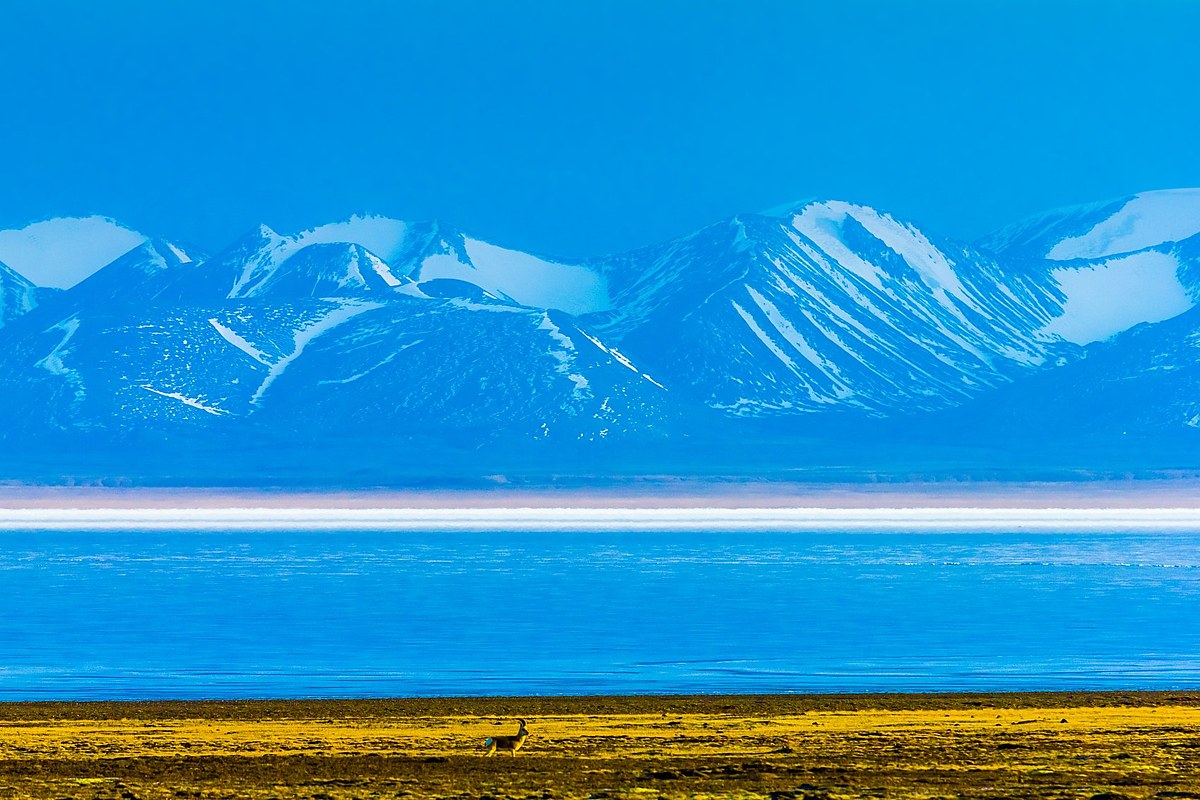
We go to the shore at first light. This is the morning I described at the start: the complete absence of human-made sound, a flat slate-blue lake that changes colour as clouds cross, and wildlife on the ridge – Tibetan wild asses, and sometimes Tibetan antelope or gazelle at a distance. We watch from the vehicle or a long way off; I do not approach, feed or chase animals, and I do not let anyone fly a drone without checking local rules.
The physical reality is worth stating plainly. At 4,077 m, walking fifty metres feels like more than it should. A mild headache and a dry mouth are common, hands get cold fast, and the UV is brutal even when the air is freezing. I carry oxygen, keep the walking optional and short, and have a simple rule: if someone’s headache persists, or there is chest tightness or difficulty breathing, we descend – no discussion, no “but we came all this way”. Photo opportunities are never worth a medical problem at that altitude.
We spend the middle of the day slowly, then begin the retreat before late afternoon. Everything we carried in comes back out with us, including every wrapper. There are no bins here and there will not be a clean-up crew.
Day 7 – Out of the high country and down to Qilian
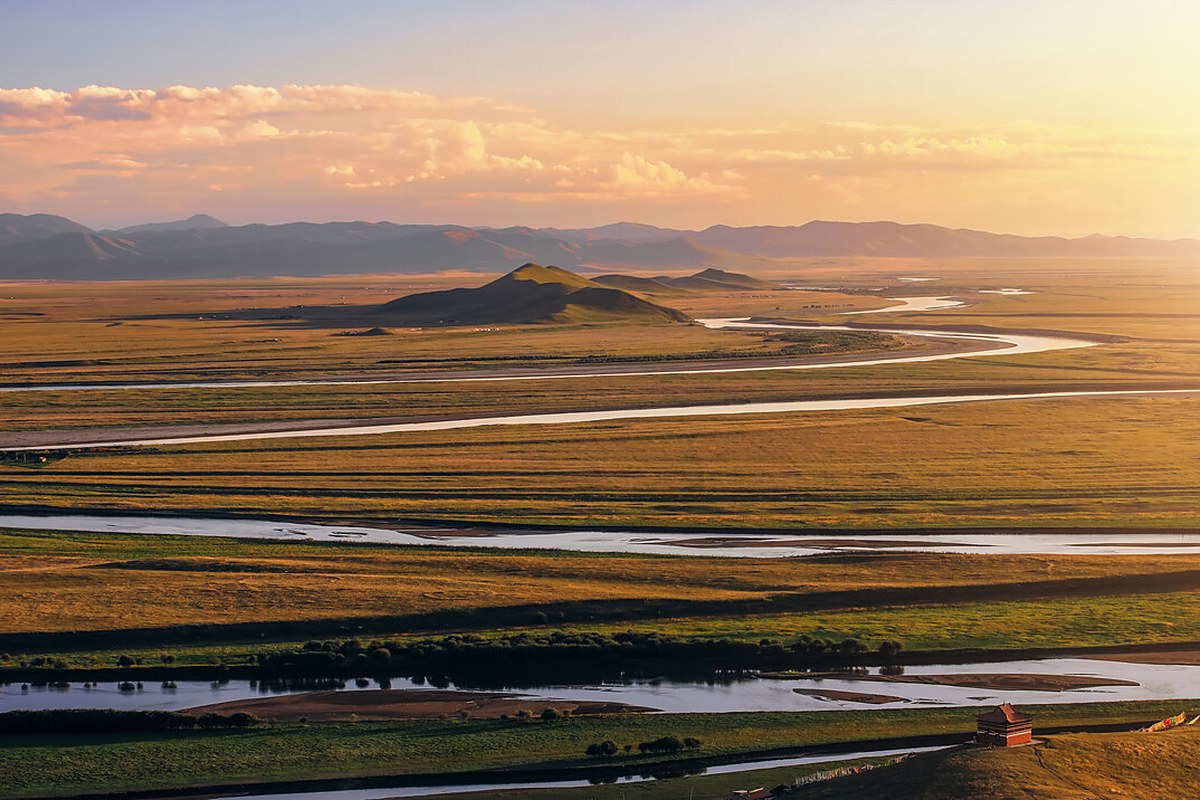
We descend toward the Qilian grasslands, and the change is physical relief: within an hour the bare, thin-aired basin becomes green meadow with a river bending through it, yak on the slopes and the car windows down. People get sleepy and happy at once. I have stopped trying to explain this transition in advance; it is better felt.
What I eat: hand-grabbed mutton and a noodle soup in Qilian county. Where I sleep: a modest county hotel at about 2,800 m – easier to sleep than the basin, and the first hot shower in three days is a genuine event.
Day 8 – Menyuan, Daban pass, back to Xining
A morning crossing of the Daban Mountain viewpoint, with one last look back over the Menyuan valley – in mid-July a sheet of yellow rapeseed with the Gangshika snow peak behind it. Then down to Xining by early afternoon. I leave the rest of the day empty for laundry, a hot shower and a long lunch of cold wheat-starch noodles and sweet fermented barley.
Day 9 – A buffer day, then out
I keep the ninth day as buffer and departure. Mountain weather, river levels and permit decisions can change with a day’s notice, and a spare day is what keeps a nine-day expedition from turning into a missed flight. If everything ran to plan, it becomes a slow Xining morning – the provincial museum, the Hui quarter, or simply breakfast – before the airport.
Where to sleep, and the gear that matters
Xining, Chaka, Delingha, Qilian: town hotels, functional to comfortable, always with heating and hot water confirmed. Near Hala Lake: supported camping with four-season tents, sleeping bags rated well below zero, insulated mats, a cook and a stove. I tell guests honestly that they will hear the wind, that it will be cold, and that a hot water bottle and a headlamp are the two things they will wish they had packed. Vehicle kit: two 4WDs minimum, recovery gear, spare tyres, extra fuel, three days of water and food, a satellite phone, offline GPS tracks, oxygen and a first-aid kit. Confirm your travel insurance covers high-altitude 4WD expeditions – many standard policies do not.
Food I would order again
- Qinghai earthen hotpot in Xining and kang guo lamb in Delingha.
- Camp-stove noodles and stew near the lake – simple, hot, and the best meal of the week at 4,000 m.
- Hand-grabbed mutton in Qilian, yak yoghurt with sugar, ga mian pian torn noodle soup.
- Niang pi cold noodles and tian pei sweet fermented barley back in Xining.
- Lanzhou-style beef noodles if the route starts that way.
Vegetarians need to tell me well before departure: outside Xining this is a meat-led cuisine, and “vegetable broth” is not a safe assumption. On the remote section, everyone eats what the cook can carry – so special diets must be planned at the provisioning stage, not requested at the camp stove.
Mistakes I see on high-altitude 4WD trips
- Not confirming access and permits. this protected area’s rules change. I check with the local authority before every departure and reroute if entry is closed. It is the first item on my list, not the last.
- Going with one vehicle. two minimum, with recovery gear and a driver who knows the tracks. There is no roadside assistance out here.
- Underestimating 4,077 m. mild headache and broken sleep are normal; persistent symptoms mean descend. No hiking at the lake, no alcohol, plenty of water, oxygen in the vehicle.
- Assuming “it looks close on the map”. a hundred kilometres of gravel and soft ground can take most of a day. No dinner reservations at the far end.
- Expecting signal, fuel or shops. satellite phone, offline maps, extra fuel, three days of water and food, carried from the last town.
- Wandering off alone or approaching wildlife. stay in sight of the vehicles; watch animals from a long distance.
- Leaving any trace. everything carried in is carried out, including food wrappers and used tissues.
- Packing for summer. snow is possible near the lake in any month. Hard shell, fleece, gloves, hat, high-SPF sunscreen and sunglasses all come.
Practical notes
Permits and access: Hala Lake lies in a conservation-sensitive area; access rules and permit requirements change between years and seasons. Confirm current conditions with the local authority before departure and be prepared to adjust the route. Altitude: 2,261 m in Xining, about 3,196 m at Qinghai Lake, roughly 4,077 m at Hala Lake. Mild headache, dry mouth and broken sleep are common; persistent headache, chest tightness or difficulty breathing means descend immediately and seek medical help. Anyone with a cold should postpone the high section. Vehicle and safety: two 4WDs minimum, eight travellers maximum, satellite phone, offline GPS, recovery gear, oxygen, extra fuel and three days of provisions. Insurance must cover high-altitude 4WD travel. Climate: near-freezing nights, intense UV, and weather that can change within an hour – snow is possible in July. Money: set up Alipay or WeChat Pay with a foreign card before arrival and carry cash; county towns are effectively cash-only. Phones: Google, WhatsApp and Instagram are blocked on mainland networks – arrange a roaming eSIM or VPN in advance, and download offline maps before leaving Xining. Documents: carry your passport; remote and protected areas may have registration checks. Drones: permission is required in most protected areas – ask locally, and assume the answer is no near wildlife.
What this trip actually felt like
Back in Xining on day eight, after the first proper hot shower in three days, I found a guest sitting in the hotel lobby doing nothing, still in the slightly stunned state people come off a long remote trip in. “My ears keep expecting to hear something,” she said. That is Hala Lake. Nine days is a lot of vehicle time, two nights are genuinely cold, somebody will have a headache, and there are stretches with nothing to look at but gravel. I would be doing you a disservice to call it comfortable. But there is a particular kind of reset that happens when you spend a day in a place with no signal, no shops, no other vehicles and no human-made sound at all, and the only living things on the horizon are a line of wild asses watching you from a ridge. You come back with salt in your bag, a split lip from the wind, and a strange reluctance to turn your phone back on. That is what is “actually there”. If that sounds like suffering, take the seven-day Grand Loop instead – it is a wonderful trip and a much easier one. If it sounds like the reason you travel, then yes, nine days, and let me check the permit situation first.
The questions people asked me afterwards
“You put the permit warning at the top. Is access actually a problem?” It changes, which is exactly why it belongs at the top. Hala Lake is in a conservation-sensitive area, and in different years entry has required permission or been restricted. I confirm current conditions with the local authority before every departure and I will reroute the trip if access is closed – no arguments at a checkpoint, no “we’ll see when we get there”. If an operator tells you access is always guaranteed, ask them when they last checked.
“How bad is 4,077 m? I’ve been to 3,000 m and felt fine.” The step from 3,000 to 4,000 m is the one people notice. You will feel short of breath walking fifty metres, your mouth is constantly dry, sleep is lighter, and a mild headache is common. I keep the walking optional, carry oxygen, watch the group rather than the schedule, and descend at the first sign of persistent symptoms. Fitness helps less than people expect; a slow ascent and honesty about how you feel help more.
“Could we cut a day and still do it?” I would not. The remote section needs provisioning, a shakedown day, two travel days and a weather/permit buffer. Seven days covers the classic Grand Loop beautifully; compressing Hala Lake into that is how people end up driving after dark on an unmarked track at altitude. If nine days is too long, the 8-day Grand Loop gives you the salt lakes and the grasslands without the remote camping.
Frequently asked questions
Is Hala Lake worth a 9-day 4WD expedition?
For travellers who want genuine remoteness, yes. It is a high, silent lake in the Qilian Mountains with no settlements or services, reached by unpaved tracks, combined with the Qinghai and Qaidam highlights. For travellers who want comfort or a packed sightseeing list, the 7- or 8-day Grand Loop is a better fit.
Do I need a permit to visit Hala Lake?
Access rules for this protected area change between years and seasons. Permit requirements and current restrictions must be confirmed with the local authority before departure; we reroute if entry is closed. Do not rely on an operator’s blanket assurance.
How high is Hala Lake and will I get altitude sickness?
The lake sits at about 4,077 m. Mild headache, dry mouth, breathlessness on short walks and lighter sleep are common, and more likely than at 3,000 m. We ascend gradually over several days, carry oxygen, keep exertion minimal and descend immediately if symptoms persist or worsen.
Why do you need two 4WD vehicles?
There is no roadside assistance, no reliable mobile signal and no repair shop for many hours. Two vehicles with recovery gear, spare tyres, a satellite phone, extra fuel and three days of provisions are the minimum safe setup for stream crossings and soft ground.
When is the best time to go?
June to September, though snow is possible near the lake in any month and rain can make tracks impassable. Winter is not suitable for a standard expedition.
Can I see wildlife there?
Often Tibetan wild asses, and sometimes Tibetan antelope or gazelle, at a distance. We watch from the vehicle or a long way off – no approaching, feeding, chasing or drone flights near animals.
The expedition in this guide: Hala Lake & the Grand Loop – 9-Day Premium 4WD Expedition. For a monastery-and-village overland alternative see Gannan & the Joseph Rock Road – 8-Day 4WD Expedition, and read Qinghai & Gannan Altitude: What to Expect before you book.