
A reader who had just read my five-day Gannan notes wrote back: “Eight days in one small region? Won’t we run out of things to see by day four? I keep thinking we should add Xi’an or something.” I understand the instinct – it is the same one that makes people try to fit six countries into two weeks. But my answer surprised even me when I wrote it down: the eighth day in Gannan is not for seeing more places. It is for staying long enough that the places stop being sights. On the five-day version you catch Zhagana’s mist once if you are lucky. On the eight-day version you get three mornings, and by the third you know which house the smoke comes from and which track the cattle take. That is the difference, and I would not trade it for an extra city.
Short answer: Eight days is the in-depth Gannan itinerary, and its value is time rather than distance. It adds Ganjia’s limestone peaks and ancient octagonal fortress, a full day at Labrang Monastery, two unhurried days at Langmusi and three nights at Zhagana, plus the Milarepa Pavilion in Hezuo on the way back. Altitudes run about 2,900-3,300 m, with an optional extension to the granite spires of Lianbaoyeze. Best months are June to September and October. If you want a checklist of famous places, take five days; if you want to actually settle into a valley, take eight.
Here is the moment that convinced me. On the third morning in Zhagana, I was up before the mist and found a guest already sitting on the low wall outside the guesthouse with a cup of tea, doing nothing at all. The valley below was still grey, a dog was barking somewhere up the slope, and she had not taken her camera out of the bag. “Yesterday I would have been running to the viewpoint,” she said. “Today I just wanted to see what time the smoke starts.” That is not something a five-day itinerary can give you. It needs an extra morning with nothing scheduled on it, and it is the reason I keep recommending the longer version to people who can spare the time.
At a glance: the 8-day in-depth route
| Route | Lanzhou – Xiahe – Ganjia – Sangke – Gahai – Langmusi – Zhagana (3 nights) – Hezuo – Lanzhou |
| Altitude | About 2,900 m (Xiahe) to 3,300 m (Langmusi, Zhagana viewpoints); Lianbaoyeze option higher |
| Best months | June to September; October for clear light. July and August are green but busy |
| Pace | Deliberately slow: three 2-3 night stays, several unscheduled afternoons |
| Optional add-on | Lianbaoyeze granite spires and alpine lakes, a long day trip from the Zhagana area |
| Who it suits | Repeat visitors to China, photographers, anyone tired of one-night stops |
Day 1 – Lanzhou to Xiahe: crossing a cultural border in an afternoon
We leave after breakfast, not at dawn – the altitude is coming, and a slow first day pays for itself. Through Linxia, a Hui town of minarets, flatbread and lamb soup, then up into greener hills where the architecture changes to flat-roofed Tibetan houses, prayer flags and mani walls. You never leave Gansu province, but by late afternoon everything looks, smells and sounds different.
Check in, walk a little, eat early. What I eat: momo dumplings and yak meat at a family-run place in Xiahe, plus thick yoghurt with sugar. Where I sleep: Xiahe town, close to Labrang, in a hotel with proper heating.
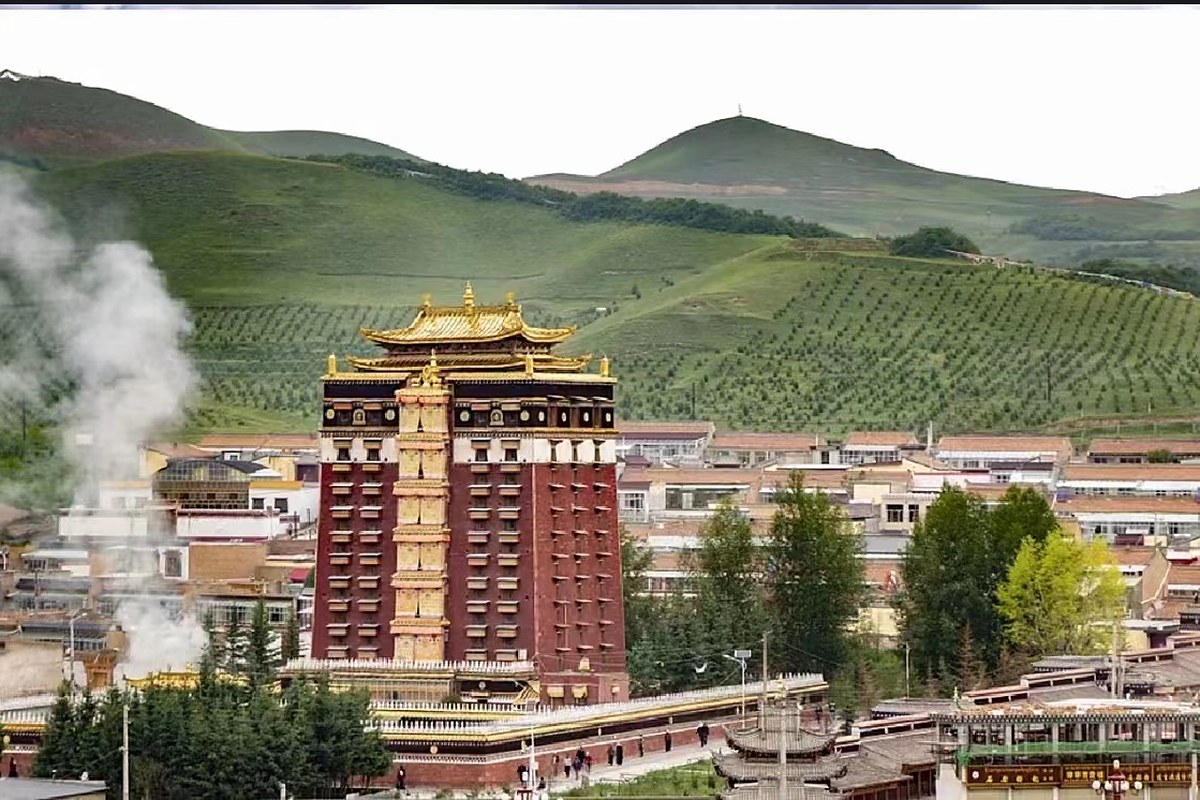
Day 2 – A whole day at Labrang Monastery
Most itineraries give Labrang ninety minutes. I give it a day, and it is the first thing the eighth day buys. We start before seven on the prayer-wheel corridor, roughly three kilometres of covered wheels around the monastery’s edge, walking clockwise with the pilgrims. The sound is what stays with you: a continuous dry creak of wooden spindles, low voices, footsteps. Elderly women in heavy robes, a child asleep on someone’s back, nobody performing for anyone.
Later we hire the monastery’s own guide for the great prayer hall, the colleges of medicine and astronomy, the butter sculptures and the thangkas. If debate is happening in the courtyard – monks clapping, arguing doctrine in a stylised rhythm – we sit at the edge and watch quietly. Photography is prohibited inside most chapels; the Gongtang Pagoda above the complex is where you take the overview photograph.
What I tell guests: walk clockwise, keep your voice down, ask before photographing people, don’t step on thresholds or point your feet at an altar. Nobody will try to sell you anything or convert you. The most common interaction is a monk smiling at someone turning a wheel the wrong way.
Day 3 – Ganjia: the octagonal fortress and the white cliff
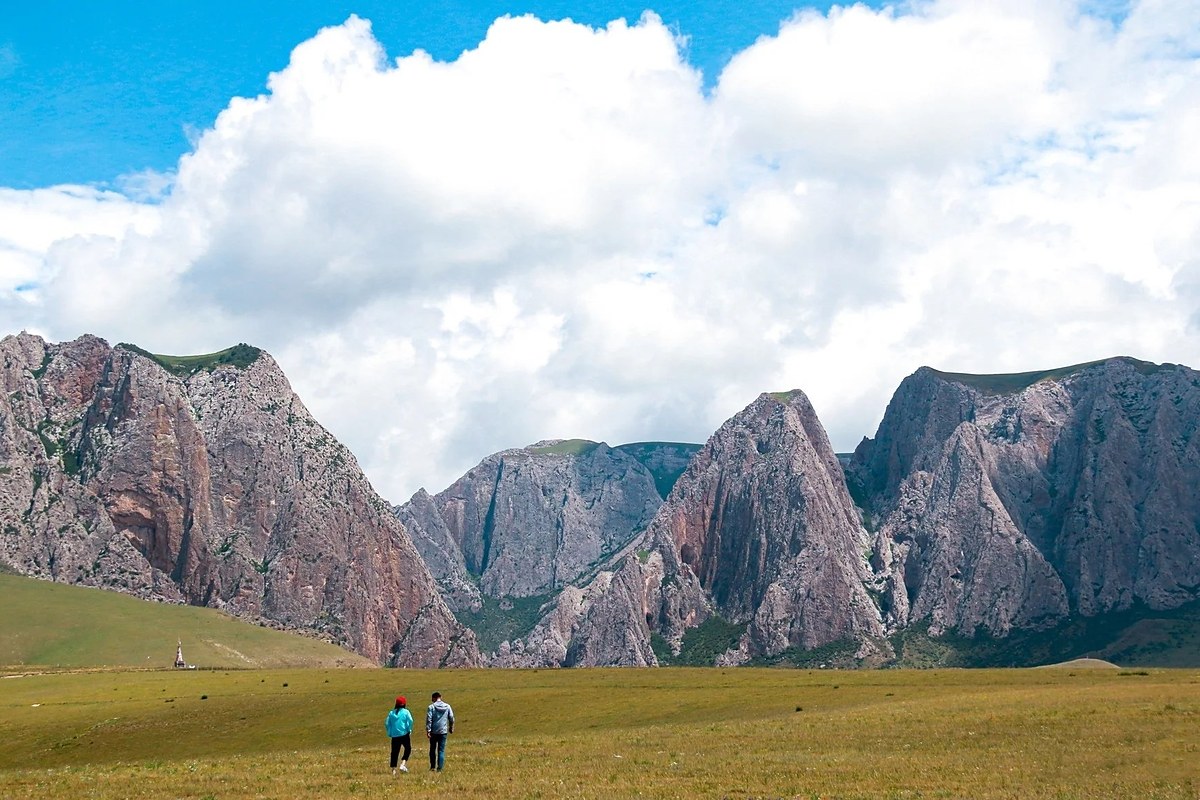
This is the day five-day itineraries cannot fit, and it is one of my favourites. About an hour north of Xiahe, Ganjia is a broad grassland basin ringed by pale limestone peaks. In it sits Bajiaocheng, an eight-cornered earthen fortress from the Tang-Song period that still has people living and farming inside its walls – not a reconstructed attraction, a village inside a ruin. Nearby, the Baishiya (White Cliff) rises as a sheer pale wall with a cave monastery at its foot, and the small Zuohai Temple is one of the few surviving Bon monasteries in the region.
The light on the limestone in late afternoon is extraordinary, and there are usually almost no other visitors. Walking the fortress rampart with the grass and the peaks behind it feels like finding something you were not supposed to find.
What I eat: a simple lunch in Xiahe, then barley bread and butter tea at a family home if the opportunity arises. Where I sleep: a second night in Xiahe, so there is no packing before breakfast.
Day 4 – Sangke Grassland, Gahai Lake, and down to Langmusi
We drive south across Sangke Grassland – yak, horses, wildflowers in July – and I stop at a family-run pasture rather than a commercial “Tibetan experience” camp. If guests want to ride, a local handler leads the horse; I skip the costume-photo packages because they turn a landscape into a transaction. Then Gahai Lake, a shallow alpine wetland with a great deal of birdlife, and on to Langmusi at about 3,300 m on the Gansu-Sichuan border.
Two monasteries sit on opposite sides of a gorge here, with the source of the Bailong River between them. We walk up the gorge in the late afternoon, when the red cliffs catch the light. I do not take guests to the sky-burial site – it is a funeral, not a viewpoint – and if someone asks, we discuss the custom in the car instead.
What I eat: a light noodle soup. At 3,300 m a heavy dinner plus a cold room is a reliable recipe for a bad night. Where I sleep: Langmusi town, with heating.
Day 5 – Langmusi in the morning, then into the stone box
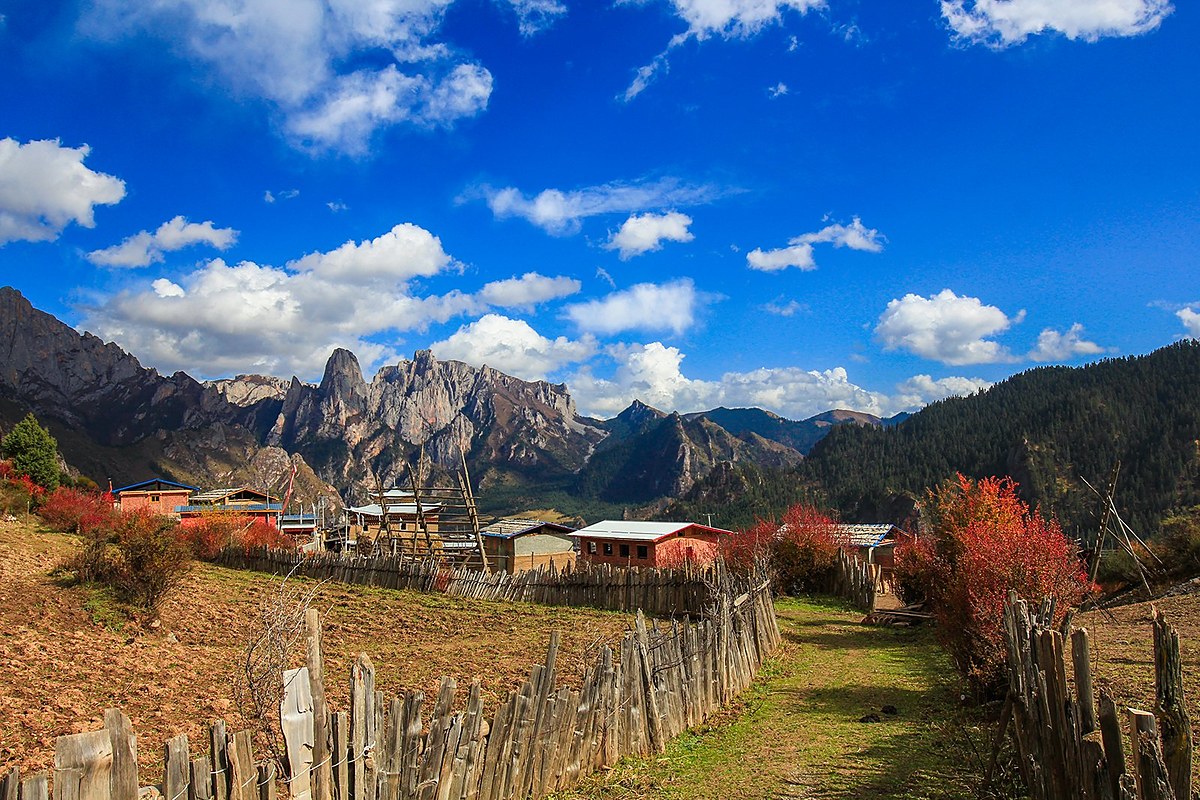
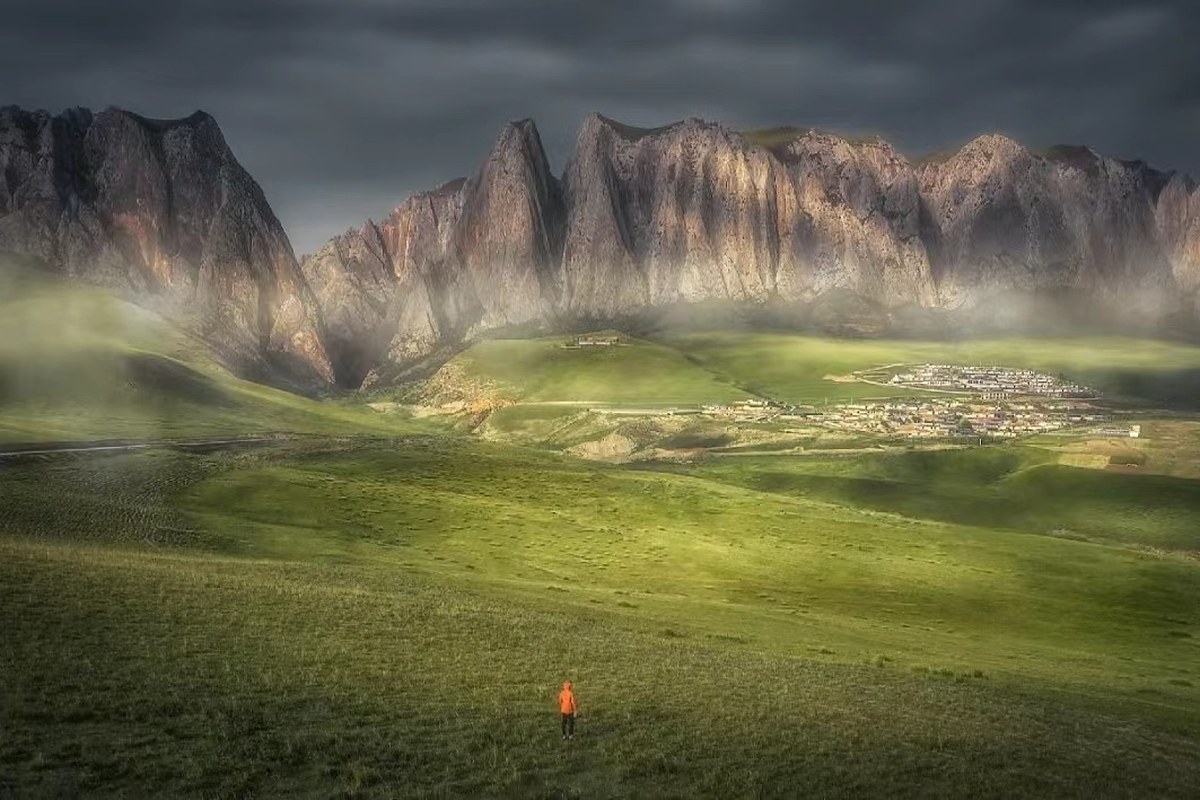
A slow morning at the monastery courtyards and the river source, then the short drive to Zhagana. I never manage to prepare people for the arrival: the road turns and there is a village of wooden houses and hand-worked fields enclosed by enormous grey limestone walls, like a stone box set down in the valley. Joseph Rock wrote about it in the 1920s and it was famous in the West long before it was famous domestically.
We check into a village homestay and walk gently in the afternoon – the Fairy Beach meadow with the whole cliff face ahead of you, or simply the tracks between the four hamlets of Dongwa, Yeri, Dari and Daiba. Fields here are still worked by hand. Where I sleep: inside the village. What I eat: a home-cooked dinner of potatoes, yak meat, barley and local greens at the guesthouse; it is the meal guests talk about most, and it appears on no app.
Day 6 – First full day in Zhagana
Dawn at the viewing platform above Dongwa. After a cool night, mist pools in the valley and moves between the walls while the village wakes – cooking smoke, cattle on the track, a dog barking somewhere above. I take guests up, then stop talking for half an hour. Later, the longer walk toward the Rock viewpoint / Tiger Mouth section, with the stair sections treated as optional; you feel every flight at 3,000-plus metres.
In the afternoon, nothing. This is deliberate. People read, sit on the guesthouse wall, wander back down to the fields, or fall asleep. On a five-day trip that afternoon would be a three-hour drive to the next town. Here it is the point.
Day 7 – A second full day: choose the long walk or the granite spires
Two options, and I let guests decide the night before. Option A – stay slow: a second dawn, a longer village circuit through the upper hamlets, a visit to a family for tea, and another unscheduled afternoon. This is what I recommend to photographers and to anyone who has spent the week in a car. Option B – Lianbaoyeze: a long day trip to the granite spires and alpine lakes on the plateau edge, a completely different, harsher landscape of bare rock and cold blue water. It means several hours of driving each way and a higher altitude, so I only offer it to guests who are sleeping well and have no headaches.
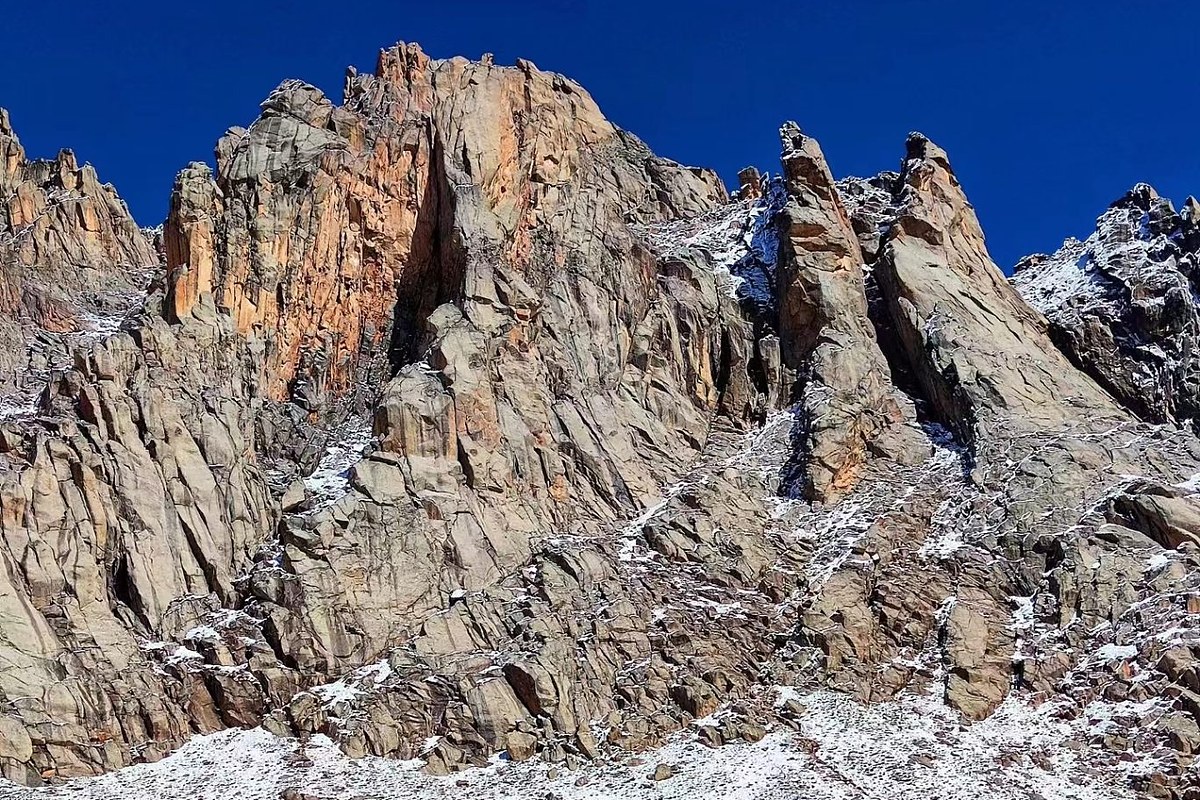
On the last run, a guest chose Option A and spent the morning helping the guesthouse family stack barley. She came back for lunch covered in dust and said it was the best day of the trip. I mention it because “in-depth” is not a marketing word here – it literally means having a day with nothing on it.
Day 8 – Hezuo, then back to Lanzhou
We leave after the mist clears and drive north through grassland to Hezuo for the nine-storey Milarepa Buddhist Pavilion, an hour well spent before the landscape returns to loess hills and Hui noodle shops. Lanzhou by late afternoon: airport, or an evening bowl of Lanzhou beef noodles which, after a week of barley and butter tea, tastes like coming home.
Where to stay, and why I keep you in one bed
The structure of this trip is three long stays – two nights in Xiahe, one or two in Langmusi, three in Zhagana – rather than a different hotel every night. That alone changes how a place feels. Xiahe: a town hotel within walking distance of Labrang, with reliable heating. Langmusi: small guesthouses; check hot-water hours and request a non-smoking room. Zhagana: village homestays, basic, thin walls, sometimes shared facilities – and the view from your window. I knowingly book a less comfortable room here because the dawn is the reason for the trip. If you need a proper bed more than a photograph, I will put you in Diebu county and drive in early, but I will tell you exactly what you are trading away. In July and August, book Zhagana four to six weeks ahead.
Food I would order again
- Momo dumplings, yak meat and thick yak yoghurt in Xiahe.
- Butter tea – salty, oily, an acquired taste, right on a cold morning.
- Tsampa (roasted barley flour kneaded with butter tea), best tried in someone’s home.
- Fern-root pig, highland potatoes and barley bread – Gannan staples that never make it onto a menu app.
- Linxia lamb soup and flatbread on the way in; Lanzhou beef noodles on the way out.
- Qingke barley wine if offered – go easy at altitude.
Vegetarians do surprisingly well: potato, barley, greens and noodles are staples. Tell me before the trip so the homestay cooks know. Alcohol hits harder at 3,000 m and worsens the already-broken sleep.
Mistakes I see on longer Gannan trips
- Filling the extra days with more driving. the point of eight days is three mornings in one valley. Adding a distant county every day turns it back into the five-day trip with more laundry.
- Underestimating 3,300 m. mild headache and broken sleep are common early. Water, no alcohol, light dinners, no big hike on arrival day.
- Walking the prayer corridor anti-clockwise or shooting close-ups of monks without asking. clockwise, quiet voice, camera down in chapels.
- Going to the sky-burial site as a spectator. it is a funeral. We discuss the custom in the car and do not attend.
- Buying “antique” thangkas, caterpillar fungus or “Tibetan silver” from roadside pitches. polite no; let your guide handle it.
- Packing for summer only. July afternoons are mild, dawn is near freezing, and UV is fierce even in cold air. Fleece, shell, hat, high-SPF sunscreen.
- Assuming cards and signal. village homestays and small shops are cash-only; set up Alipay or WeChat Pay with a foreign card before arrival, and download offline maps.
Practical notes
Altitude: about 2,900 m in Xiahe, up to roughly 3,300 m at Langmusi and the Zhagana viewpoints, higher on the Lianbaoyeze option. Expect a mild headache, dry mouth and broken sleep early; descend and get medical help if a headache persists or there is chest tightness or difficulty breathing. Anyone with a cold should postpone the higher sections. Documents: carry your passport; hotels and some sites require it for registration, and border-adjacent areas occasionally have extra checks. Money: international cards rarely work outside Lanzhou, so set up Alipay or WeChat Pay in advance and carry cash for homestays, small shops and toilets. Phones: Google, WhatsApp and Instagram are blocked on mainland networks – arrange a roaming eSIM or VPN before you fly; valley signal is patchy, so download offline maps. Roads: paved but winding; tell me if you get carsick and I will plan more stops. Toilets: basic, often squat-style outside the towns. Crowds: July, August and the first week of October are busiest; June and September are my picks.
What this trip actually felt like
By day seven, the group had stopped asking what time we were leaving in the morning. That is the small, unglamorous sign that a trip has worked. Someone was reading on the guesthouse wall, someone else had learned the name of the family’s dog, and the camera bags were staying in the rooms more often than not. On the last drive back to Lanzhou we were all quiet in a different way from the quiet of day one – not tired-of-each-other quiet, just the kind where nobody needs to fill the space. Gannan in five days is a beautiful, slightly rushed introduction and I am happy to run it. Gannan in eight days is the version where you stop being a visitor to the sights and become, briefly, a guest in a valley where the smoke starts at about twenty past six. If that distinction does not interest you, take the five days and add another city. If it does, you will not run out of things to see – you will just stop counting them.
The questions people asked me afterwards
“Three nights in a village with hot water that barely works – is that really better than another famous sight?” For some people, no, and I mean that. If a reliable shower and a firm bed are what let you enjoy a trip, take the five-day version and stay in Diebu. But I have watched the third dawn change people’s relationship with a place in a way the first dawn never does: by then you know the track, the smoke, the light, and you stop reaching for the camera. That is what I am selling with the extra nights. Not a sight – a familiarity.
“Would you add Xi’an or another city at the end?” I would not, on this itinerary. You would spend a half day flying or several hours on a train, land in a completely different climate and rhythm, and spend the last two days exhausted. If you want a city, put it on a separate trip. Gannan rewards continuity; its whole value is that the days blur into one another.
“We’re vegetarian and a bit nervous about village food. What actually happens?” You eat very well, as long as I warn the homestay in advance. Potatoes, barley bread, greens, noodles, yoghurt and tea are everyday staples here, not special requests. The one thing to know is that “vegetable broth” is not a safe assumption in small towns, so I brief the cooks before we arrive. Guests are usually surprised by how little of a problem it is.
Frequently asked questions
Is 8 days in Gannan too long?
Not if you want depth. The eight-day version is built around long stays rather than extra destinations: a full day at Labrang, Ganjia’s fortress and white cliff, two days around Langmusi and three nights in Zhagana. Travellers who prefer a new town every night are usually happier with five days.
What does the eighth day add over five days?
A full day at Labrang Monastery, the Ganjia basin (Bajiaocheng octagonal fortress, Baishiya cliff, Zuohai Bon temple), extra time in Langmusi, and two or three dawn mornings in Zhagana instead of one. Optionally, a day trip to the granite spires of Lianbaoyeze.
How bad is the altitude on the longer route?
Similar to the five-day trip: about 2,900 m in Xiahe and up to roughly 3,300 m at Langmusi and Zhagana viewpoints, higher if you choose Lianbaoyeze. Mild headache and broken sleep are common early; keep the first day slow and avoid alcohol.
Can I visit the sky-burial site in Langmusi?
I do not take guests there. It is a living funeral rite, not a spectacle. We discuss the custom in the car and visit the two monasteries and the Bailong River gorge instead.
Do I need a 4WD for eight days in Gannan?
No. The standard route uses paved mountain roads. 4WD is only needed for the dedicated overland expeditions along the Joseph Rock Road or to Hala Lake.
When should I book for July or August?
Four to six weeks ahead for Zhagana village homestays, earlier if your dates fall in the first week of October. There are very few rooms in the valley and the whole basin fills at once.
The route in this guide: Best of Gannan – 8-Day In-Depth Private Tour. For the shorter first trip see Hidden Valleys of Gannan – 5-Day Private Tour, and for the longest version Gannan, Longnan & Maijishan – 10-Day Private Tour.