
A reader with a long weekend asked: “We’ll be in Xining for three days. Can we do Qinghai Lake and Chaka without killing ourselves? And how bad is the altitude, really? I keep seeing conflicting answers.” I get this one a lot, usually from people who have just looked at a map and decided 900 km sounds manageable. It is manageable – I run it constantly – but the map does not tell you about the wind at 3,200 m in July, or the fact that your first night’s sleep at altitude is the thing that decides how the next two days feel. So I answered with the pace I actually use, and I was honest about the mediocre bits too. Here is that reply.
Short answer: Three days is enough to see Qinghai Lake, Chaka Salt Lake and Kumbum Monastery from Xining, and it is the shortest Qinghai trip I would recommend. You will spend about 900 km on the road, sleep two nights away from the city, and reach roughly 3,200 m at the lake – high enough that your first 24 hours should be deliberately slow. The single biggest variable is not the itinerary but the weather: Chaka’s famous “sky mirror” only works on a calm, bright day with a thin film of water.
The first time the lake appears, the car usually goes quiet. You come over the pass and there it is, an enormous flat blue that does not behave like a sea – the horizon sits too high, the water has no visible tide, and the light is so hard that the far shore looks like a painted line. Then you step out at 3,200 m and the wind hits you, and you understand you are somewhere else entirely: it is July, the sun is burning the back of your neck, and your hands are cold. A guest from Seattle once said, “It feels like the sky is closer here,” and then laughed at herself, but she was describing something real. That first stop is why I keep day one slow. You need ten minutes just to stand there before anyone starts asking what time lunch is.
At a glance: 3 days from Xining
| Route | Xining – Kumbum Monastery – Qinghai Lake – Chaka – Xining |
| Distance | About 850-900 km by road |
| Altitude | Xining 2,261 m; Qinghai Lake about 3,196 m; Chaka about 3,059 m |
| Best months | June to September; rapeseed flowers along the lake in July and August |
| Physical level | Easy walking, but the altitude is the real consideration |
| Biggest risk | Wind at Chaka. It destroys the mirror reflection regardless of how well you planned |
I run this as a first trip to the plateau for guests arriving from sea level, so I build the altitude into the pace rather than pretending it isn’t there. Here is exactly how I spend the three days.
Day 1 – Xining to Qinghai Lake: monastery, pass, then the first sight of water
We leave Xining around 9 a.m., not at dawn. On day one at 2,261 m I want a full night’s sleep and a slow start. First stop is Kumbum Monastery (Ta’er Si) in Huangzhong, about 30 km from the city – one of the six great Gelugpa monasteries of Tibetan Buddhism and the birthplace of Tsongkhapa. Give it two hours. The three things to look for are the butter sculptures, the murals and the dui xiu applique hangings. Photography is prohibited inside most halls, and I ask guests to walk clockwise around the stupas, as the monks do.
Then we climb west over the Riyue Mountain pass (about 3,400 m), the historic divide between farming and pastoral country, and descend toward Qinghai Lake. The first view of that much water at this altitude stops people mid-sentence. In July and August the shore is edged with yellow rapeseed; in June and September it is grassland and big sky. We drive part of the western shore, stop at a permitted lakeside area, and reach our hotel before dark.
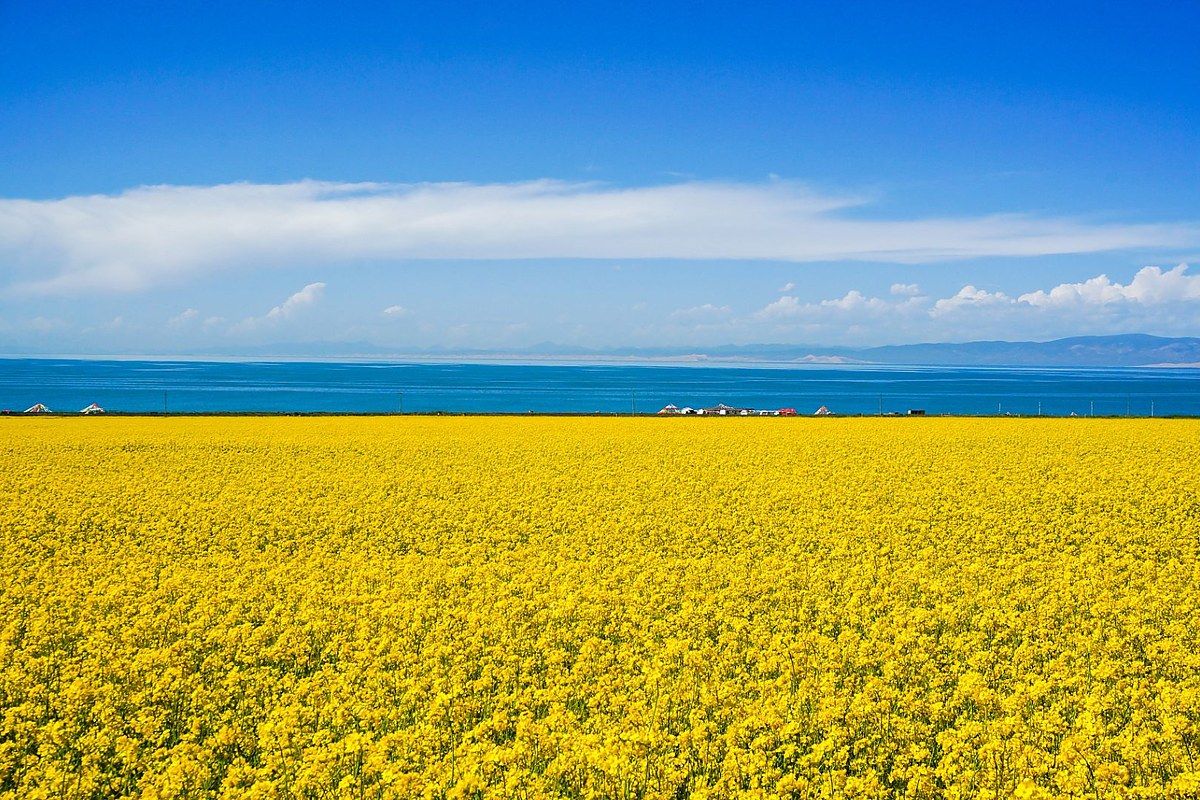
What I eat: Qinghai earthen hotpot – a copper pot of mutton, potatoes and highland vegetables – and a bowl of ga mian pian, torn noodle squares in soup. It is the right food for a cold plateau evening. Where I sleep: either Heima River (Heimahe), if guests want the famous sunrise, or Jiangxigou / Chaka town. I explain the trade-off below.
Day 2 – Sunrise, Chaka Salt Lake, and back across the grassland
Heima River sunrise is the classic Qinghai Lake image: the sun comes up out of the water and the whole lake turns gold. It requires a 5:30 a.m. wake-up in a cold wind, and I only do it if the sky is clear. Guests who value sleep over photographs skip it and we start at 8.
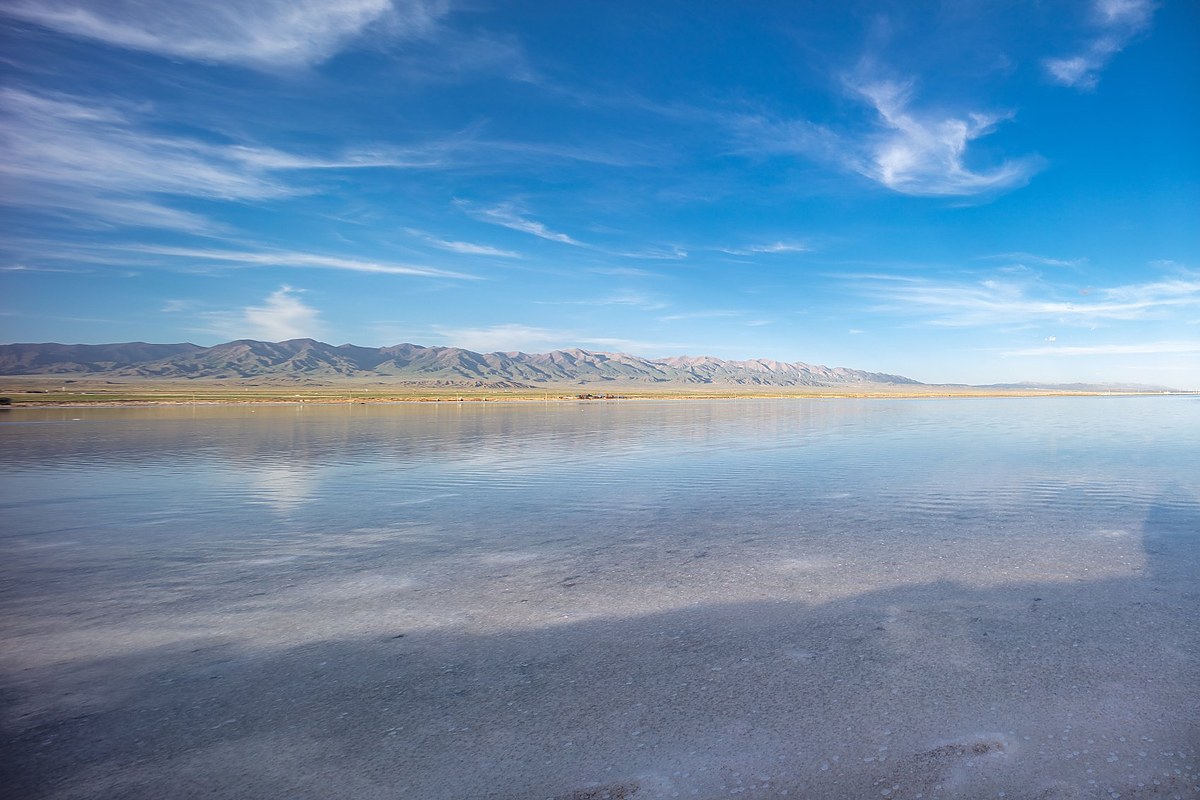
Then about 80 km to Chaka Salt Lake, the “Sky Mirror of China”. Here is how I actually play it: check the wind before buying shoe covers, take the small railway or walk out to the far end of the shallow water where the crowds thin, and shoot low – the mirror effect depends on a still, thin film of brine over white salt. Bright clothing (red, white) reads beautifully; harsh midday overhead sun and any breeze flatten it. Sunglasses and high-SPF sunscreen are not optional – the reflection off the salt roughly doubles your UV exposure.
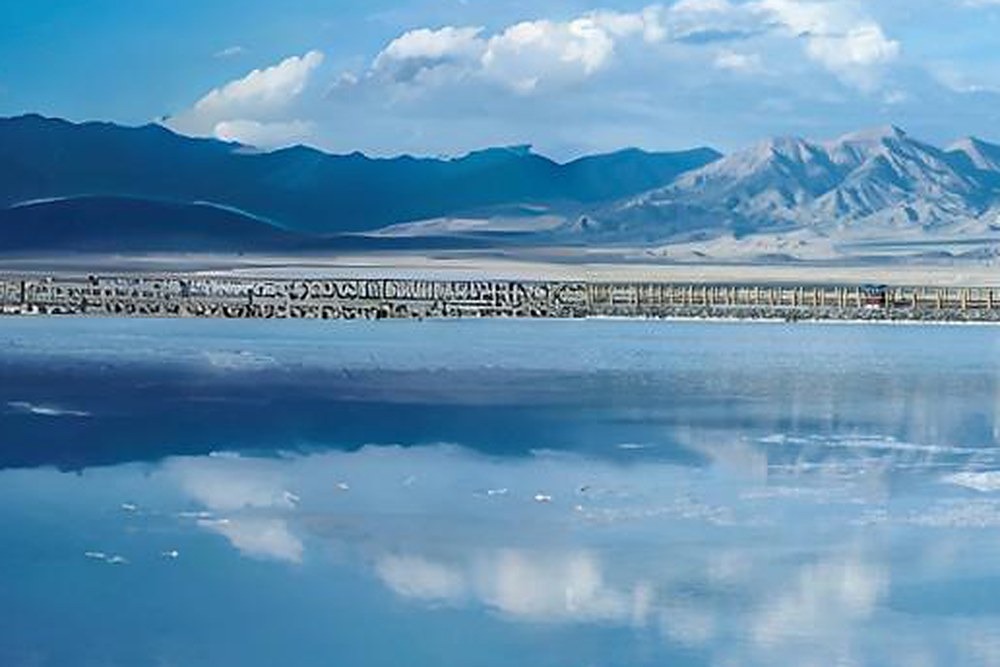
Two honest caveats: the salt crust is sharp, so wear the shoe covers or old sandals and rinse your feet afterwards; and the brine is corrosive to camera gear and jewellery. There are two adjacent ticketed areas (the original Chaka Salt Lake and “Sky No. 1”); I take guests to the original unless they specifically want the newer installations.
Here is what it actually feels like out on the salt. The shoe covers are thin plastic and they tear; everyone gets a little brine in anyway, and ten minutes later the salt starts crystallising on your ankles and itching. The crust underfoot is crunchy and uneven, and the glare is physical – you can feel it on your cheeks even with your eyes closed, which is why I hand out sunglasses before anyone argues about them. Kneel down low for the reflection shot and the water is only a centimetre deep and icy cold. On a calm morning the clouds sit perfectly under your feet and people giggle, actually giggle, at walking on the sky. On a windy one the surface chops up into little grey waves and the whole thing looks like a wet car park. I have had both in the same week. This is the one stop on the route where I tell guests, plainly, that we cannot control the result.
On the way back we cross the Qilian grassland foothills, where the road bends through river meadows with herders’ sheep and yak. I stop at a viewpoint rather than a paid “Tibetan experience” camp.
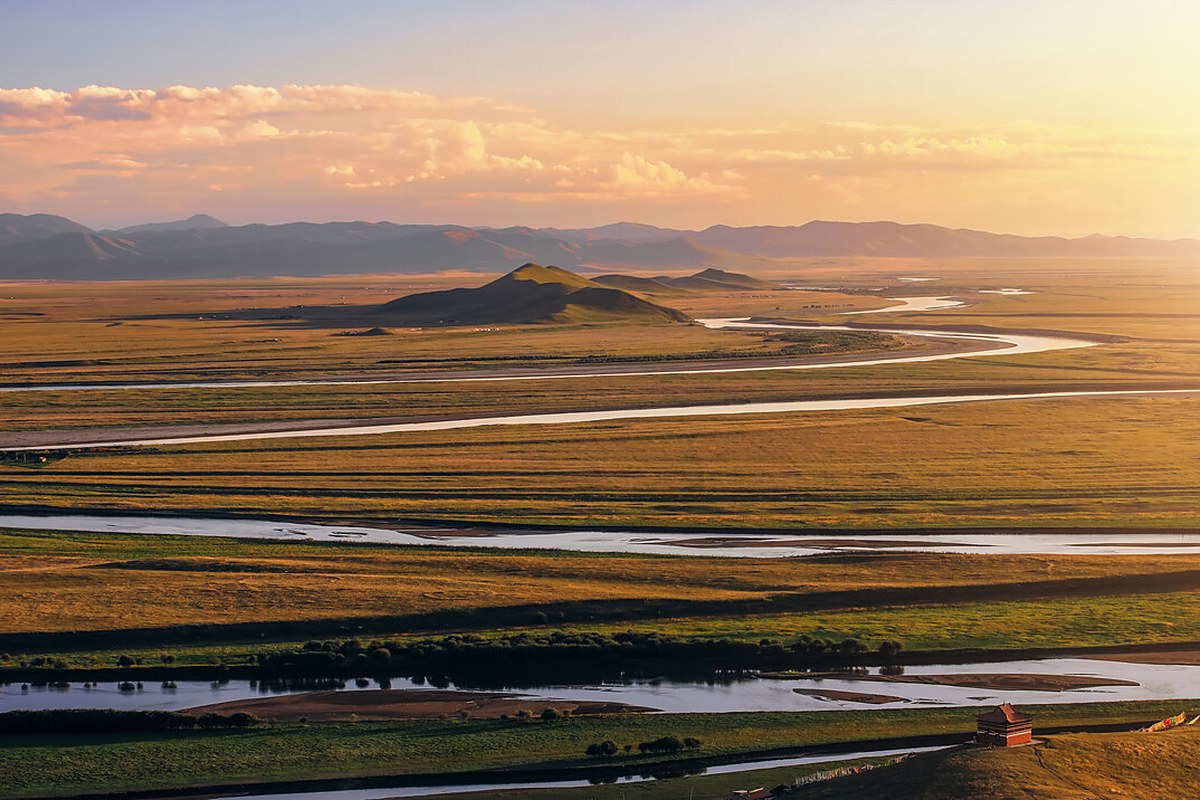
What I eat: kang guo lamb – Qinghai’s iron-pot fried mutton with potato, onion and chilli – plus a bowl of yak yoghurt with sugar. Where I sleep: back in Xining, in Chengxi or Haihu district, where a hot shower and a proper bed matter after two nights up high.
Day 3 – Xining at walking pace, then out
I keep day 3 deliberately light: the Qinghai Provincial Museum for the plateau’s ethnic and Buddhist history, a walk through the Dongguan Grand Mosque neighbourhood (the Hui Muslim quarter), and a long lunch. Then the airport or railway station. If guests have a late departure and more energy, the Qinghai-Tibet Plateau Museum of Natural History or a morning market is easy to add. I never schedule a third long drive on this day – by then the accumulated altitude and dry air catch up with people.
Where to stay, and the Heima River decision
In Xining, stay in Chengxi or Haihu district: newer hotels, reliable hot water, easy airport access. Out on the lake, the choice is real. Heima River puts you 10 minutes from the sunrise but the guesthouses are basic – shared facilities, thin walls, limited heating even in summer. Jiangxigou and Chaka town have better rooms but you lose the dawn shot. My default for first-timers is one night at Heima River if the forecast is clear, otherwise a better hotel in Chaka town and an unhurried morning. At 3,000 m, a bad night’s sleep makes the altitude feel twice as bad, so I do not gamble on it for guests who need comfort.
Whatever you book, ask about heating and hot water hours, and request a non-smoking room. In July and August, book several weeks ahead.
Food I would order again
- Qinghai earthen hotpot – copper pot, mutton, highland vegetables, ideal on a cold night.
- Kang guo lamb – iron-pot fried mutton with potato and chilli.
- Hand-grabbed mutton – plain-boiled grass-fed lamb, served simply.
- Yak yoghurt – rich, tangy, best with sugar.
- Ga mian pian and niang pi – torn noodle soup and cold wheat-starch noodles, both cheap and good for a light lunch.
- Sweet fermented barley (tian pei) – a local dessert worth trying once.
One thing never to order: Qinghai Lake’s naked carp (huang yu). It is a protected species, and any restaurant offering it should be avoided. Vegetarians should tell me in advance – this is a meat-heavy regional cuisine, though noodle and vegetable dishes are easy to arrange in Xining.
Mistakes I see first-timers make
- Arriving and immediately climbing to 3,800 m. Xining is 2,261 m; the lake is 3,196 m; the pass is higher. I keep day one gentle and never schedule the Rubber Mountain pass before guests have slept.
- Showering and washing hair on the first night at altitude. it sounds like folk advice, but a hot shower plus a cold room is a reliable way to catch a chill that mimics or worsens altitude symptoms. I ask guests to wait until they are back in Xining.
- Expecting a mirror at Chaka regardless of weather. wind and cloud kill it. I check the forecast and, if it is bad, spend longer at the lake shore instead.
- Walking into unfenced grassland for photos. much of the lakeshore is private pasture; entering without permission leads to an awkward fee demand. We use designated access points.
- Accepting “special” herb, caterpillar fungus or souvenir pitches. polite no, and let your guide handle it.
- Agreeing a horse or yak photo without a price. the price is always agreed first, in writing if possible.
- Underestimating UV. sun hat, sunglasses, high-SPF sunscreen and lip balm, even on a cold cloudy day.
Practical notes: altitude, money, connectivity
Altitude: mild headache, poor sleep and breathlessness on stairs are common in the first 24-48 hours. Drink water, skip alcohol, eat lightly, and tell your guide if a headache persists, or if you feel chest tightness or difficulty breathing – the response is to descend and get medical help, not to push through. Anyone with a cold should postpone the high passes. Climate: intense sun, cold wind, and a real chance of rain or even snow at the pass outside midsummer; pack a fleece and a shell in July. Money: set up Alipay or WeChat Pay with a foreign card before arrival and carry cash for small shops, toilets and lakeside fees – international cards are unreliable outside big city hotels. Phones: Google, WhatsApp and Instagram are blocked on mainland networks; arrange a roaming eSIM or VPN in advance, and download offline maps before leaving Xining. Documents: carry your passport; some sites verify names on reservations. Toilets: facilities on the lake loop are basic and often squat-style – tissues and hand sanitiser in the day bag.
What this trip actually felt like
I should be honest about the first night, because nobody puts it in the brochure. At 3,000 m a lot of people sleep badly – you wake at 3 a.m. with a dull headache and a dry mouth, notice how cold the room is, and lie there listening to the wind push at the window. That is normal, and it is exactly why I refuse to stack an early pass crossing or a big hike onto day two. The next morning there is usually a bowl of yak yoghurt with sugar at breakfast, the headache has gone by ten, and by the time we are back on the grassland road everyone is fine. Guests thank me for the slow first day far more often than they thank me for any viewpoint. Three days here is short; the thing you take home is not a checklist, it is that hard blue light, the cold wind in July, and the odd sensation of your own breathing on a staircase. Give yourself permission to go slowly and it is a lovely, slightly strange little trip.
The questions people asked me afterwards
“What does mild altitude actually feel like? Not the medical version.” It feels like waking at 3 a.m. with a dull headache and a completely dry mouth, noticing how cold the room is, and lying there listening to the wind push at the window. Then you get up, drink water, and by ten it has usually gone. Breathlessness on a flight of stairs is the other one – you notice you are taking stairs more slowly than usual and feel slightly offended by it. That is why I refuse to stack a high pass crossing or a hike onto day two, and why I ask guests to skip the hot shower on the first night.
“If Chaka is windy, is the whole day wasted?” No, but you have to let go of the picture in your head. On a calm morning the clouds sit perfectly under your feet and people giggle at walking on the sky. On a windy one the brine chops into little grey waves and it looks like a wet car park. I check the forecast the night before, shoot what is there for forty minutes, and then spend the extra time on the lake shore and the grassland road back. Some of my guests’ favourite photographs from this trip were taken on “bad” Chaka days, on that road, in completely unplanned light.
“How bad are the Heima River guesthouses, honestly?” Basic. Thin walls, limited heating, shared facilities in some, and a 5:30 a.m. wake-up in a cold wind for the sunrise. If the forecast is clear and you badly want that shot, it is worth one night. If you value sleep – especially at 3,000 m – I put you in a better-heated room in Chaka town and we start at eight. I make that call with the guest, not for them, because a miserable night at altitude compounds into the whole next day.
Frequently asked questions
Is 3 days enough for Qinghai Lake and Chaka Salt Lake?
Yes, for those two plus Kumbum Monastery. It is roughly 850-900 km of driving with two nights away from Xining. You will not reach the Qaidam Basin, Emerald Lake or the Qilian deep grasslands – those need five to six days.
Will I get altitude sickness at Qinghai Lake?
Possibly mild symptoms. Xining sits at 2,261 m, Qinghai Lake at about 3,196 m and the Riyue Mountain pass higher still. Most healthy travellers feel only a light headache or broken sleep. I build a slow first day, avoid alcohol and heavy exertion, and descend if symptoms persist or worsen.
What is the best month for this itinerary?
July and August for rapeseed flowers and the warmest weather, though also the busiest and most expensive. June and September are my personal picks: fewer crowds, still-green grassland, and decent light. Outside May to October, the plateau is cold and some lake facilities scale back.
Does Chaka Salt Lake really look like a mirror?
Only on a calm, bright day with a thin layer of brine over the salt. Wind or heavy cloud removes the effect entirely. I check the forecast the night before and go early, when the air is stillest.
Can I do this trip by public transport?
There are buses from Xining to Qinghai Lake and Chaka in summer, but they follow fixed timetables and do not stop at the shore viewpoints, Kumbum Monastery or the grassland. For a 3-day trip, a private car with a driver is what makes the itinerary work.
This is the route I run: Qinghai Lake & Chaka Salt Lake – 3-Day Private Tour. For a longer version see Complete Qinghai Loop – 5-Day Private Tour, and read Qinghai & Gannan Altitude: What to Expect before you fly.